Free Virtual Events That Pay for Themselves
A self-paying event is free to attend and built in four parts: free registration for a single date, an optional paid tier with something real (live Q&A, the recording, a workbook) that offsets part of the ad cost, a long block of genuine teaching, and one clearly labeled offer at the end. Watch two numbers: cost per attendee and revenue per attendee. If revenue per attendee is higher, the event pays for itself.
Call it an event, not a webinar, and make the paid tier worth paying for on its own.
Tupperware's best store was a living room
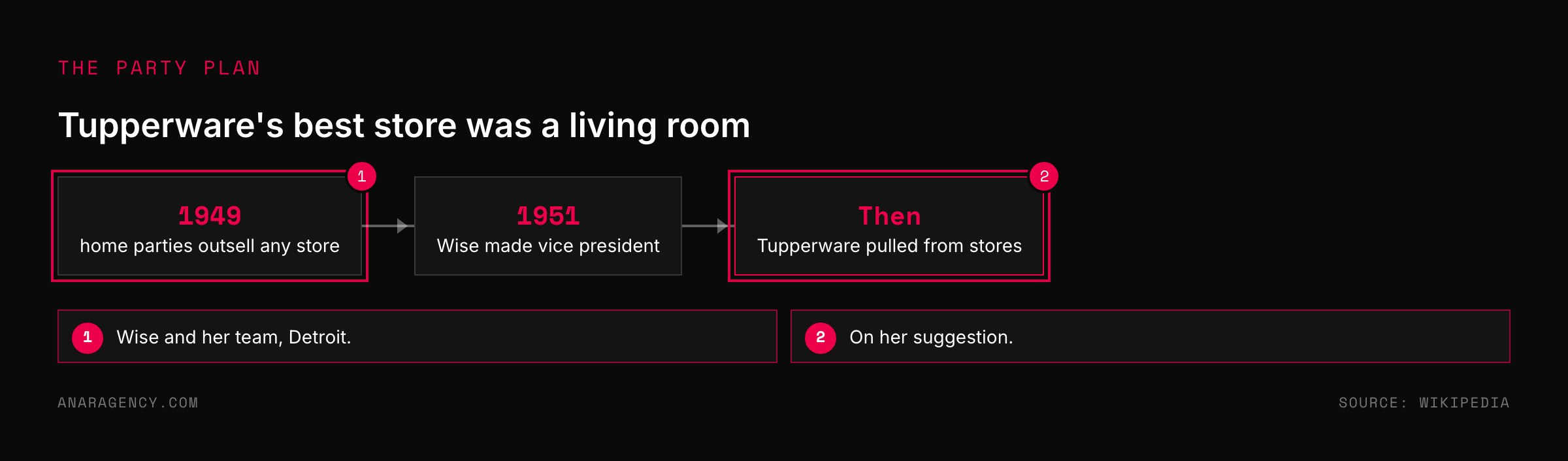
In the late 1940s a Detroit saleswoman named Brownie Wise began selling Tupperware at home parties. In 1949, she and her team sold more than any store.
In 1951 Tupperware's founder made her vice president of Tupperware Home Parties. On her suggestion, the product was taken out of stores and sold only through parties.
Why would a party beat a shop? Because a party is an event. People come for the gathering, they see the product used, they ask questions, and they buy together.
The party plan model is still used today. The living room has simply moved online.
A well-built online event can do the same job, and it can pay for its own advertising.
Why events sell
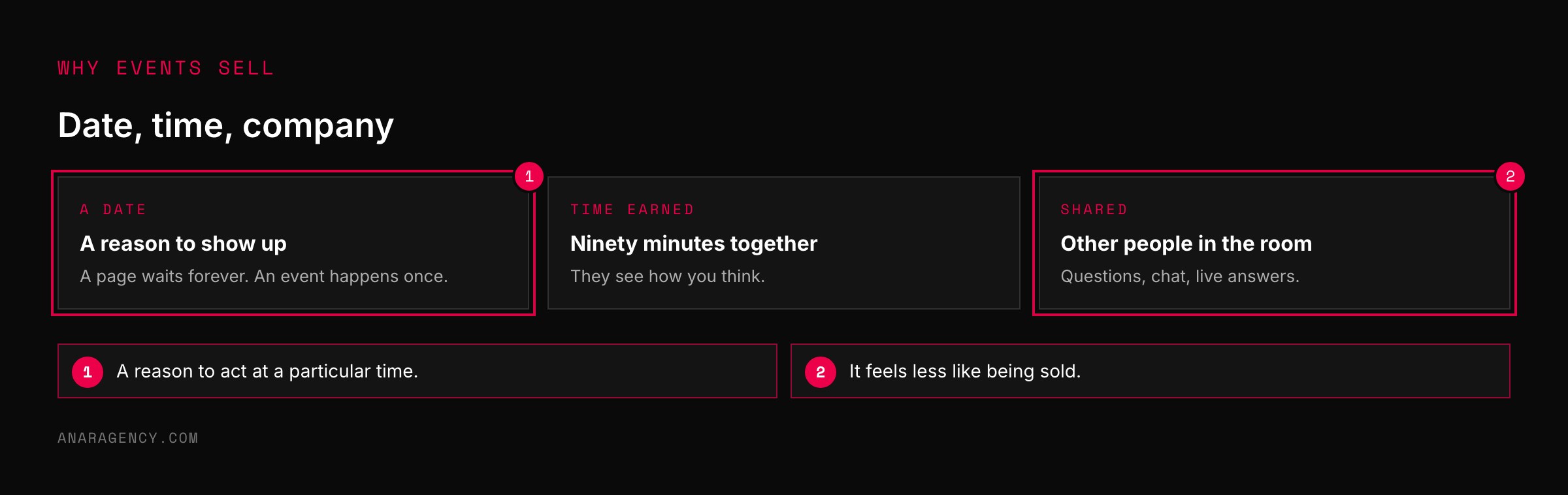
An event has a date. That alone does something a sales page cannot: it gives people a reason to show up at a particular time.
It also earns time. A person who sits through ninety minutes of teaching knows how you think and has seen whether you know your field.
And it is shared. Other people asking questions, the chat moving, a live answer: it feels less like being sold and more like being part of something.
Online formats have worn out in some markets. Many buyers now hear "free webinar" and expect a long pitch.
So call it what it is: an event, built around an outcome. For the wider idea of value before the offer, see hide the pitch.
A free event built in four parts: free registration for one date with an outcome-based title, an optional paid tier with something real that offsets ad cost, a long block of genuine teaching, and one clearly labeled offer at the end. Judge it on two numbers, cost per attendee and revenue per attendee; when revenue per attendee is higher, the event pays for itself. Keep the free event complete, label what is paid, and run it several times before judging.
The four parts of a self-paying event
1. Free registration. One date, a title built on the outcome, and a simple sign-up.
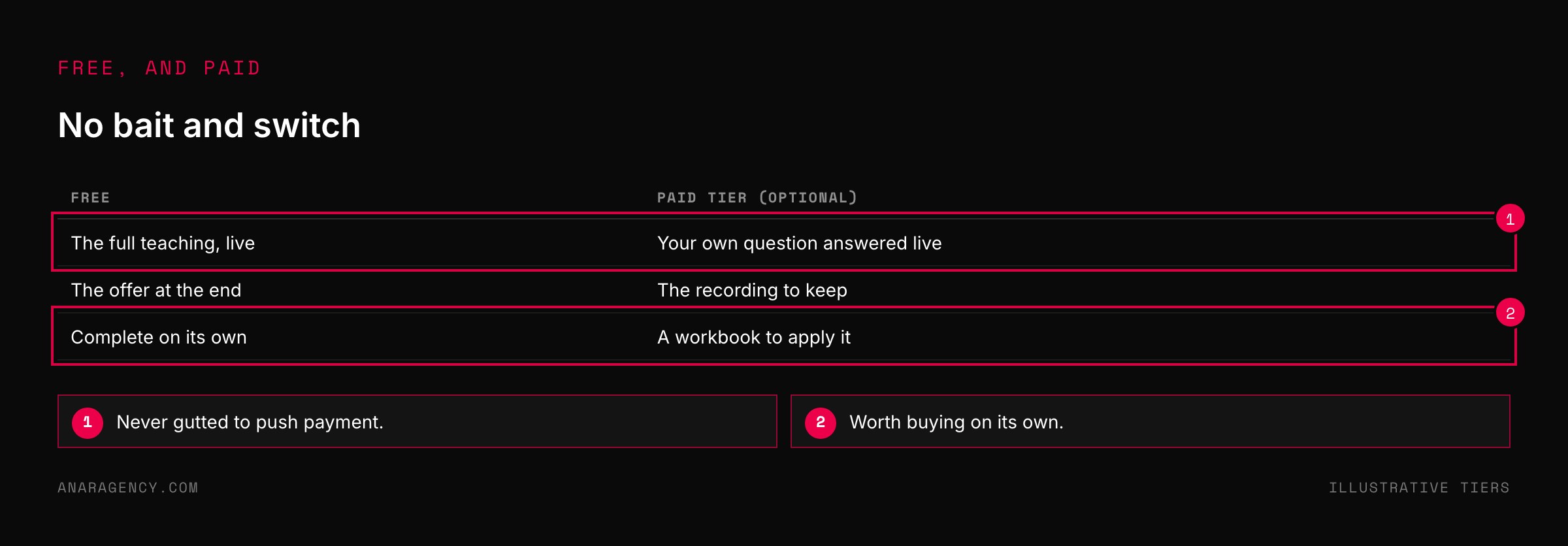
2. An optional paid tier. Right after sign-up, offer something real for a small price: live Q&A access, the recording, a workbook.
Its job is to cover part of the ad spend.
3. A long block of teaching. Teach properly.
Most of the event should be content people would be glad to have even if they never buy.
4. One offer, at the end. Clearly labeled, for people who want help applying what they learned.
The paid tier must be worth its price on its own. If it is only a fee for something that should be free, people will feel tricked, and they will be right.
Two numbers that matter
Events produce a flood of metrics. Two decide whether yours works.
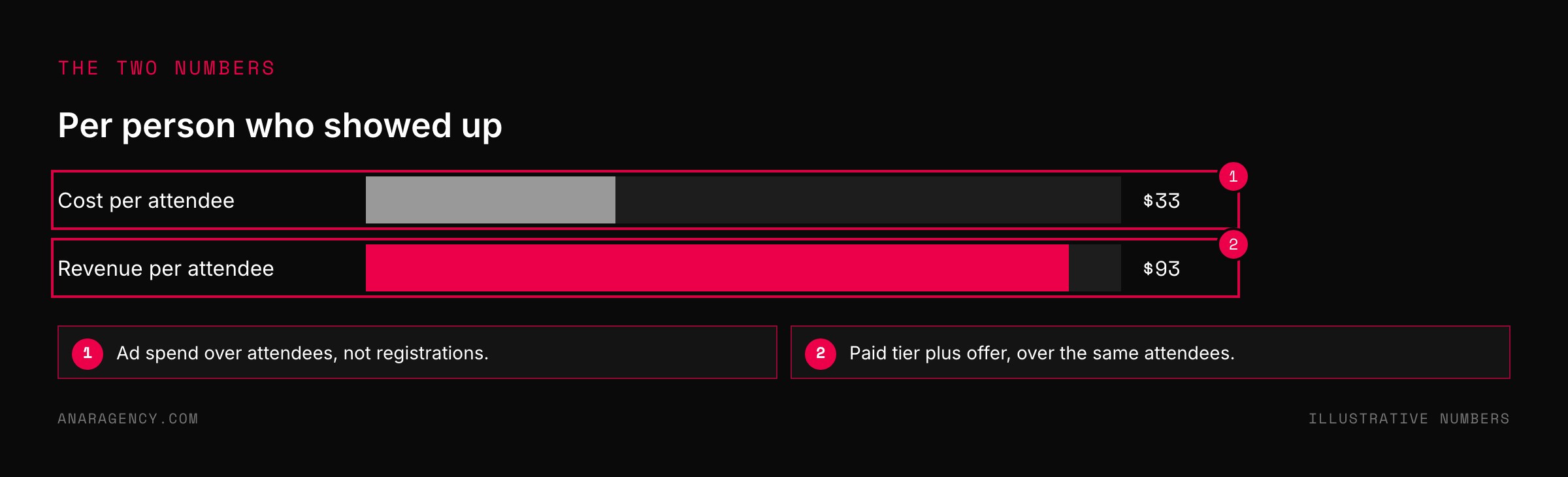
Cost per attendee: ad spend divided by the people who actually showed up. Not registrations, attendees.
Revenue per attendee: everything earned, the paid tier and the offer, divided by those same attendees.
In the illustrative example above, $10,000 of ads brings 300 attendees, a cost of about $33 each. The paid tier and offer bring in $27,760, about $93 per attendee.
If revenue per attendee is higher than cost per attendee, the event pays for itself. If not, fix the weaker number before spending more.
Show rate drives both numbers, so treat reminders as part of the event. See the show-rate sequence.
"Isn't charging for a free event a bait and switch?"
It is if the free event is gutted to push people to pay. Then it is deception, not marketing.
Done properly, the free event is complete. The paid tier adds something extra and real, like a live answer to your own question.
State clearly what is free and what is paid, before anyone pays. Advertising claims must be truthful, including claims about what an event contains.
If guests or partners promote the event and are paid or connected to you, that connection should be disclosed.
And run it the same way more than once before judging it. The first run is practice; the numbers settle by the third or fourth.
Planning the first event
A first event does not need a big budget. It needs a date, a title, a plan for the teaching, and a short promotion window.
Pick one outcome. The title should promise a result, such as "How to fill your calendar for spring without discounting". One outcome, said plainly.
Plan the teaching first. Write the three or four ideas you will teach before you write a single ad. If the content is not worth ninety minutes, no promotion will fix that.
Promote for about ten days. Our rule of thumb: spend the first few days on useful posts about the topic with no sign-up link, then a week asking people to register.
Send reminders. A confirmation right away, a reminder the day before, one an hour before, and one as you go live. Most people who register and do not attend simply forgot.
Start on time, with something for those who came. A short checklist or template for people who are there at the start rewards showing up.
Keep the offer short and clear. Who it is for, what it includes, the price, and one link, then stay for questions.
Follow up within a day. Send the recording if you promised it, and one email with the offer for those who could not stay to the end.
Then write down your two numbers, cost per attendee and revenue per attendee. They are the start of your next event's plan.
What to read next, and why
Brownie Wise (encyclopedia entry): How home parties outsold stores.
Party plan (encyclopedia entry): The selling model behind it, still in use.
Virtual event (encyclopedia entry): The online version and its formats.
Advertising FAQs for small business (FTC guide): The truth-in-advertising basics for any event promotion.
So the simple takeaway is this: before your next event, write down your cost per attendee and revenue per attendee targets, and add one paid tier worth buying on its own.
Questions executives ask
What is a self-paying virtual event?
A free online event where an optional paid tier, such as live Q&A or the recording, offsets part of the ad cost, and an offer at the end brings in the rest of the revenue.
What metrics matter for a virtual event funnel?
Cost per attendee and revenue per attendee. If revenue per attendee is higher than cost per attendee, the event pays for its own advertising.
Should I call it a webinar?
In many markets "webinar" now signals a long pitch. Calling it an event built around a clear outcome can set better expectations, as long as the content delivers.
Is it fair to charge for part of a free event?
Yes, if the free event is complete and the paid tier adds something real, and if what is free and what is paid is stated clearly before anyone pays.
How did Tupperware use events?
Brownie Wise's home parties outsold stores in 1949, and from 1951 Tupperware was removed from stores and sold through the party plan.

Filip Kovacevic is the founder of Anar Agency in Phoenix. He spent five years running SEO, Meta ads, email, and content for medical practices across the United States, and now does the same work for healthcare, home-service, legal, and professional-service businesses, alongside AI implementation. More from Filip →
Talk it through in 15 minutes
Bring one AI question from this article. We will tell you what we would do, whether or not you hire us.
Book a 15-Min Chat →