Conversation, Not Call: Lowering the Energy Cost of Booking
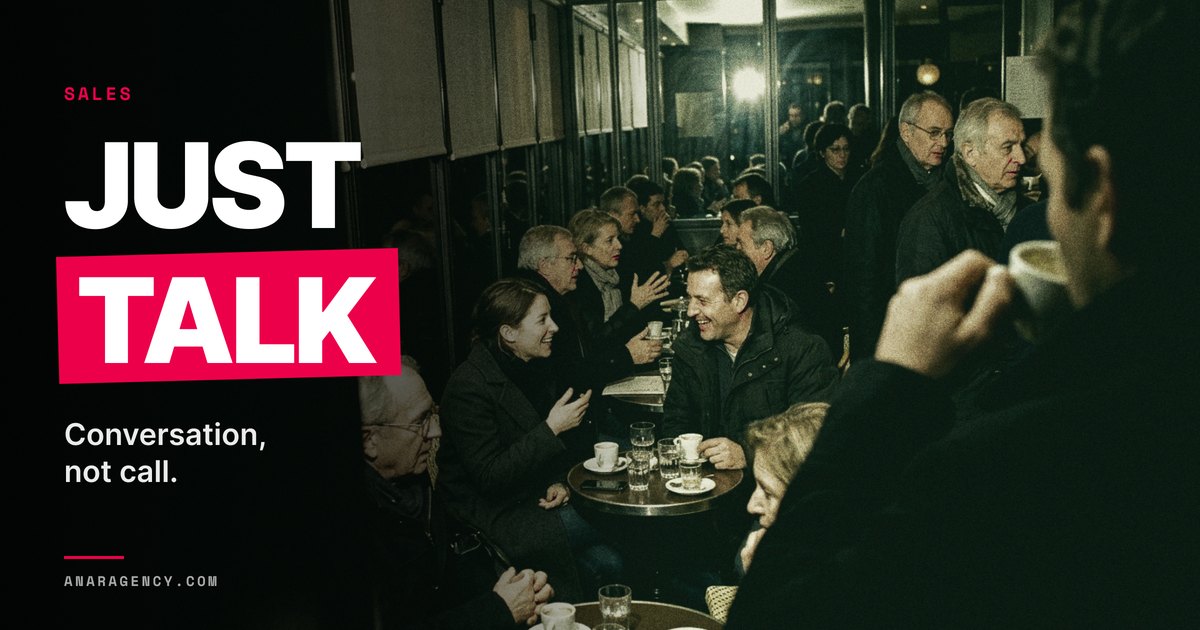
People book when their reason to talk is bigger than the energy booking costs them. A booking asks for four kinds of energy: effort (forms and scheduling), uncertainty (who, how long, will I be sold to), exposure (admitting a problem to a stranger), and commitment (a fixed time in a busy week). Cut each one.
Call it a conversation, name the person, ask only what you need, show a three-line agenda, offer short slots soon, and say what you will not do. Then test one change at a time and watch the booking rate.
Why one click was worth a patent
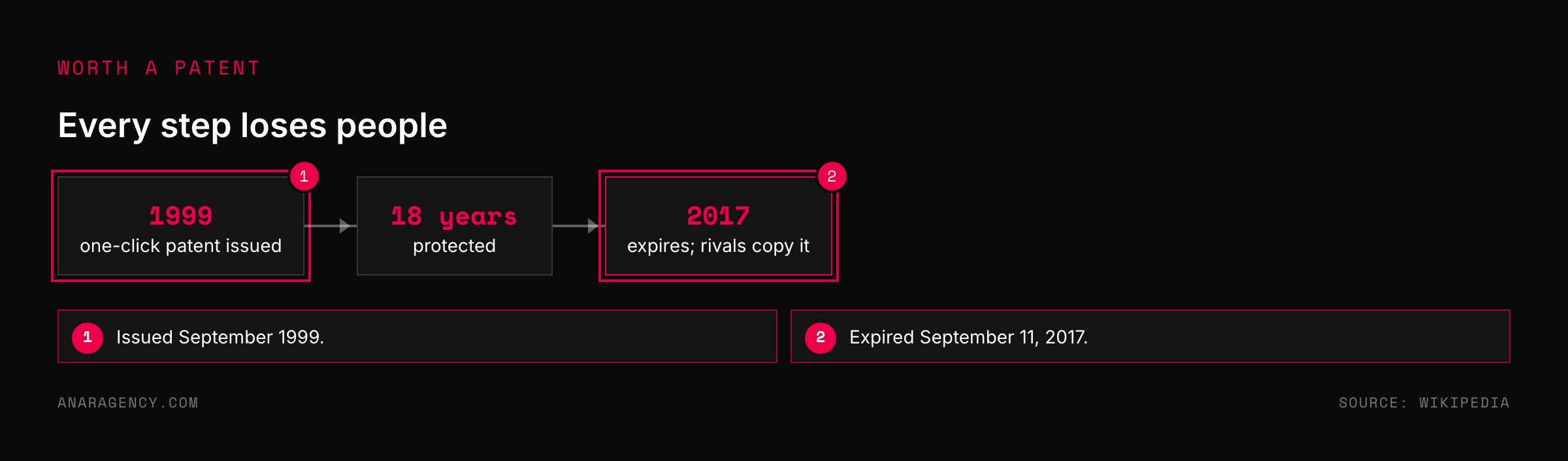
In September 1999 the US Patent Office issued Amazon a patent for buying with a single click. The patent expired on September 11, 2017.
For almost two decades, a shortcut that removed a few steps was valuable enough to defend. Since it expired, other checkout companies have offered their own one-click buttons.
The lesson is not about checkout. It is that every step between wanting something and having it loses people.
Online shoppers abandon carts at high rates, and extra steps, forced accounts, and long checkouts are among the reasons they give.
Now look at a typical booking page. It asks for more than any checkout ever did.
Booking is the most expensive click on your site
A purchase asks for money. A booking asks for something many buyers guard more closely: their time, their attention, and a conversation with a stranger.
One model of behavior, from Stanford researcher BJ Fogg, says an action happens when motivation, ability, and a prompt come together. Ability here means how easy the action is.
Most booking pages work hard on motivation and ignore ability. More proof, more urgency, more reasons, while the form still has eight fields.
Raising motivation is hard and expensive. Lowering the cost is usually cheaper and faster.
So treat booking as an energy budget. The buyer books when their reason is bigger than the total energy you are asking them to spend.
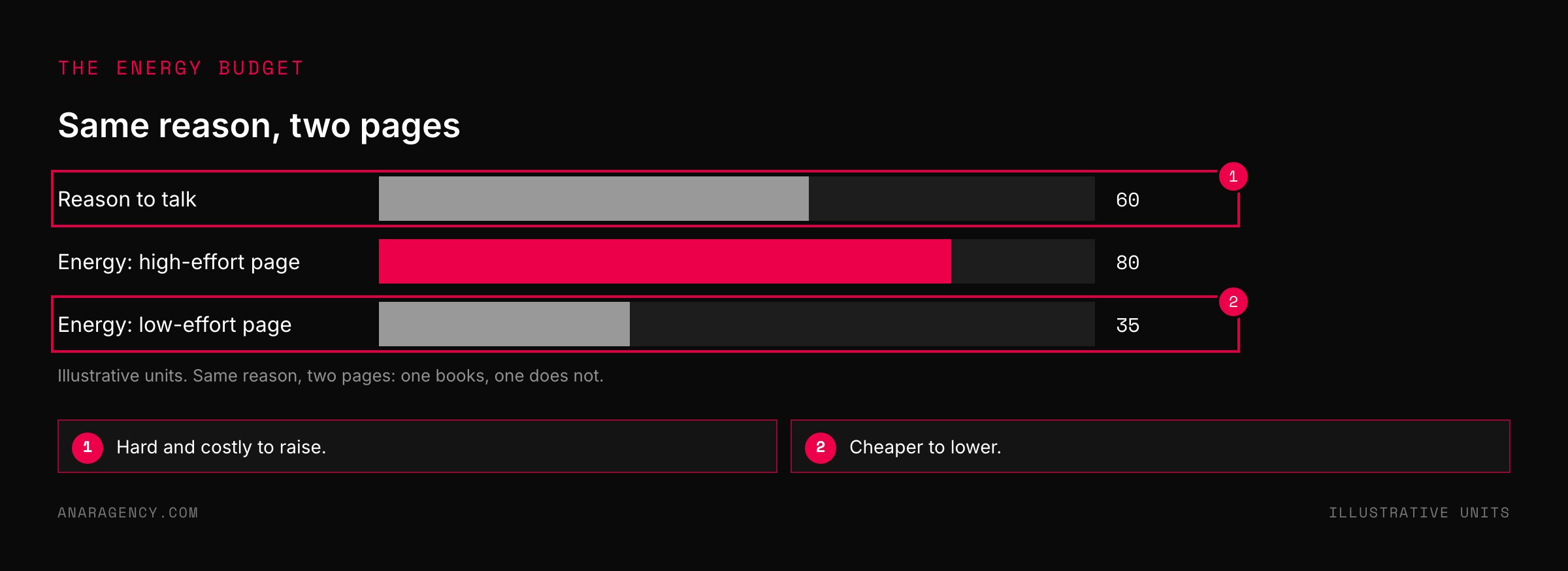
People book when their reason is bigger than the energy booking costs. A booking asks for effort, uncertainty, exposure, and commitment. Cut each: call it a conversation, name the person, show a three-line agenda including what you will not do, ask for only what you need, offer short slots soon, let people choose the channel, and make rescheduling easy.
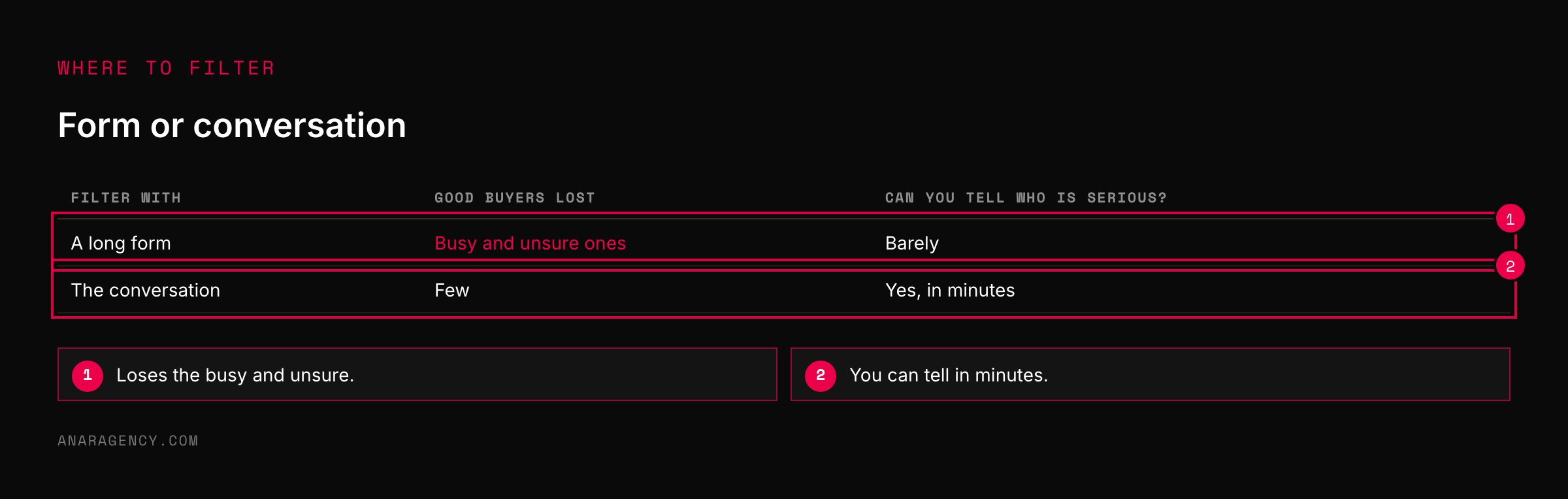
Filter in the conversation, not with a long form, and judge changes on customers per week.
Four kinds of energy a booking asks for
Effort. The fields, the login, the hunt through a calendar for a free slot. Each one is small; together they add up.
Uncertainty. Who will I talk to? How long will it take?
Will I be pushed into buying something? People are uneasy with the unknown, and reducing uncertainty is one of the first things they try to do with a stranger.
Exposure. Explaining your problem out loud to someone you have never met. For many buyers this is the hardest part.
Commitment. A fixed time in a busy week, plus the small guilt of possibly missing it.
Most booking pages only consider the first one. The other three are where buyers quietly leave.
Conversation, not call
Start with the words. "Book a call" sounds like a sales process. "Let's have a conversation" sounds like two people talking.
It is a small change, and it touches all four costs at once. A conversation sounds shorter, less formal, and less like a pitch.
But the words only work if the experience matches. If the conversation turns out to be a hard sell, you have spent trust you will not get back.
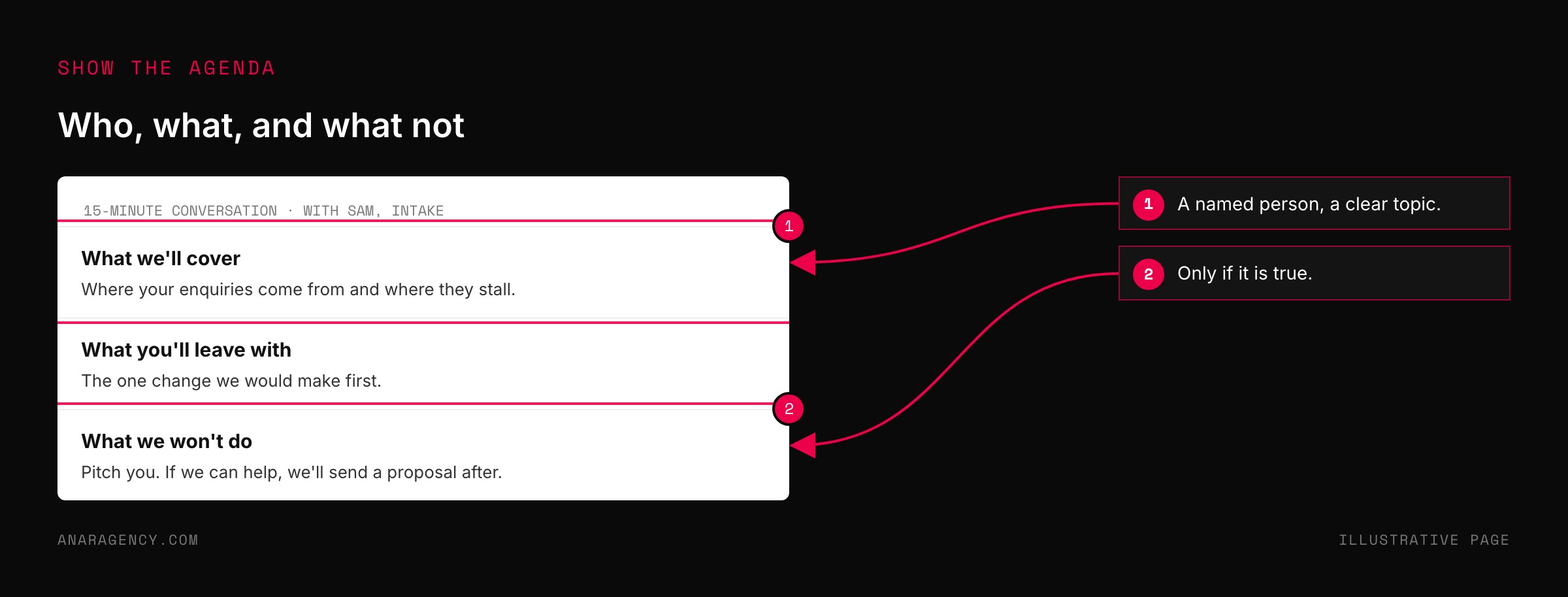
So back the word up. Name the person they will talk to, show a photo, and give a three-line agenda: what we will cover, what you will leave with, and what we will not do.
"We will not try to sell you anything on this call" is only worth writing if it is true. If it is, it may be the most valuable line on the page.
For the questions to settle before anyone books, see qualify before the call.
Low-energy swaps that cost nothing
Cut the form. Name, email, and one question are often enough. Everything else can be asked in the conversation.
Offer short and soon. Fifteen minutes within the next two days asks for less than forty-five minutes next week. A shorter wait also leaves less time for the reason to fade.
Let them choose the channel. Phone, video, or text first. Some people would rather type than talk.
Show the next step after booking. A confirmation that says who, when, how long, and what to prepare removes the uncertainty that grows between booking and the conversation.
Make rescheduling easy. A buyer who can move a slot in two taps reschedules instead of disappearing.
Change one thing at a time and watch the booking rate for two weeks. Then keep it or undo it.
"Won't an easy booking bring in tire-kickers?"
Some, yes. Lower energy brings in more people, and not all of them will buy.
But compare the two mistakes. A high-energy page filters out the curious and many good buyers who were simply busy or unsure.
A low-energy page lets more people in and filters them in the conversation, where you can actually tell the difference.
If time is tight, keep one qualifying question on the form, such as the size of the business or the budget range. One question filters well without adding much effort.
Then measure what matters. Not bookings alone, but bookings that become real conversations and real customers, as in book-a-call math.
If the numbers say the easy page brings more customers per week, keep it, even if some calls are short.
What to read next, and why
1-Click (encyclopedia entry): The patent that showed how much one fewer step can be worth.
Fogg behavior model (encyclopedia entry): Motivation, ability, and a prompt, and why ability is often the cheaper lever.
Cart abandonment research (Baymard Institute): The reasons people quit a checkout, which map closely onto booking pages.
Uncertainty reduction theory (encyclopedia entry): Why strangers first try to reduce what they do not know.
So the simple takeaway is this: open your booking page, count every field and every unknown, and remove one of each this week.
Questions executives ask
What is a good alternative to a sales call?
A short conversation with a named person and a clear agenda. It asks for less energy than a sales call, especially when the page says what will and will not happen.
How do I increase my booking rate?
Lower the energy booking costs: fewer form fields, a named person, a short agenda, short slots soon, a choice of channel, and easy rescheduling. Test one change at a time.
Should I say "book a call" or "have a conversation"?
"Conversation" usually sounds less like a sales process. It only helps if the conversation really is low-pressure; otherwise it costs trust.
Will an easier booking page bring worse leads?
It can bring more people who do not buy. One qualifying question on the form and judging results on customers per week, not bookings, keeps that in check.
How many fields should a booking form have?
As few as you need to start the conversation, often name, email, and one question. Anything else can be asked when you talk.

Filip Kovacevic is the founder of Anar Agency in Phoenix. He spent five years running SEO, Meta ads, email, and content for medical practices across the United States, and now does the same work for healthcare, home-service, legal, and professional-service businesses, alongside AI implementation. More from Filip →
Talk it through in 15 minutes
Bring one AI question from this article. We will tell you what we would do, whether or not you hire us.
Book a 15-Min Chat →