The First Three Seconds: What the Eye Does Before the Brain
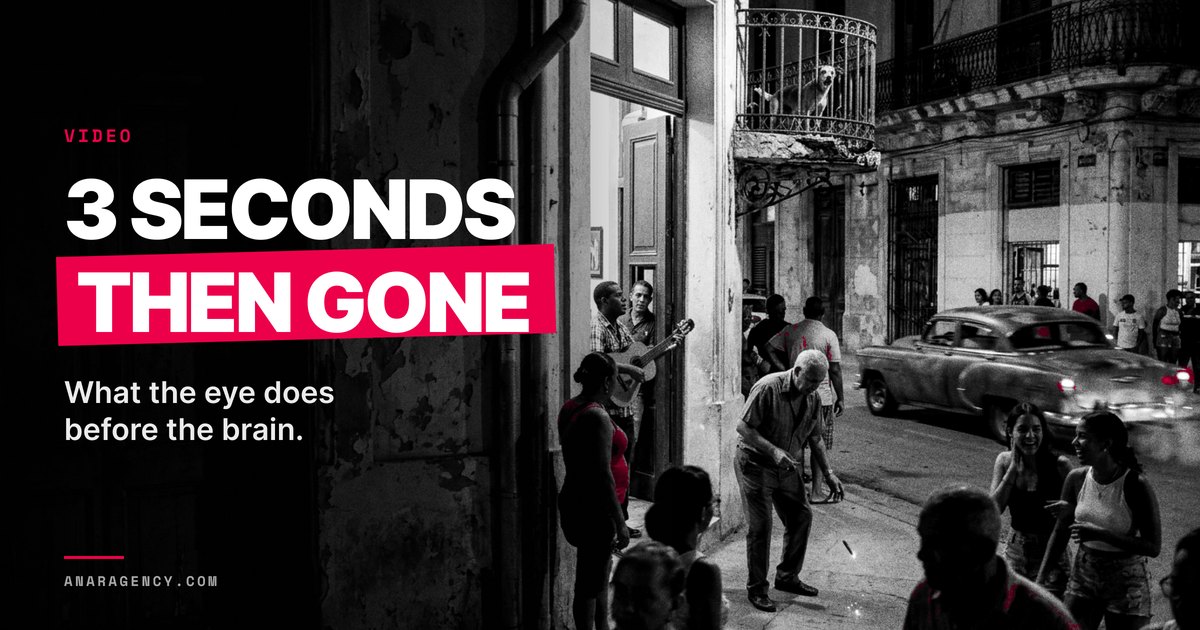
In the first three seconds of a video ad, the viewer's eye decides whether to stay before any conscious thought. It is pulled by a few things: movement, especially toward the viewer; a face looking into the camera; high-contrast text; and anything surprising. So build the opening frame on six rules.
Something is already moving. A person faces the lens. The first four words of the hook are on screen in a contrast box.
There is one subject. The frame raises a question it does not answer. And it produces a fast feeling such as surprise.
A device on the eye
In the 1950s and 1960s a Soviet psychologist named Alfred Yarbus built a device to find out where people look.
It was a small suction cup that attached to the eye itself, so that every movement of the eye could be recorded.
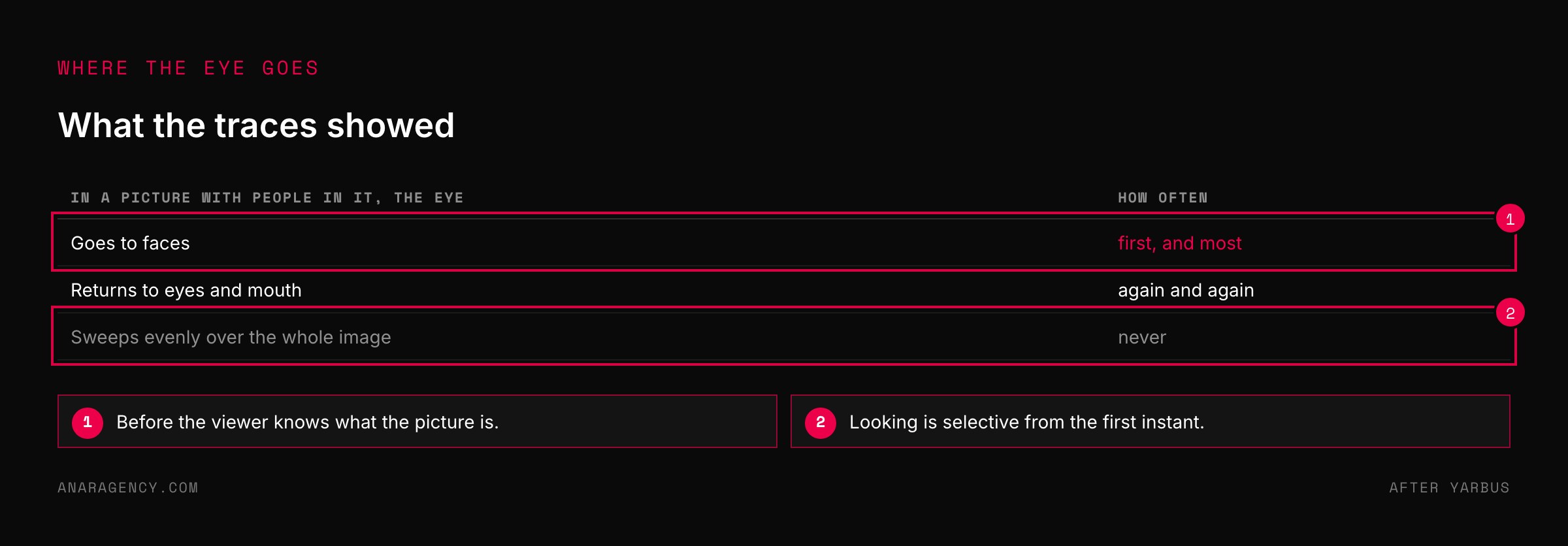
He showed volunteers paintings and photographs and recorded the paths. The traces were not random.
The eye did not sweep evenly over a picture. It jumped. And it kept returning to the same places: faces, and within faces, the eyes and mouth.
Nobody decided to look there. It happened in fractions of a second, before the viewer could have told you what the picture was about. That is the part of a person your video ad meets first.
The eye votes first
A feed is a stream of things competing for one glance. The thumb is already moving when your ad appears.
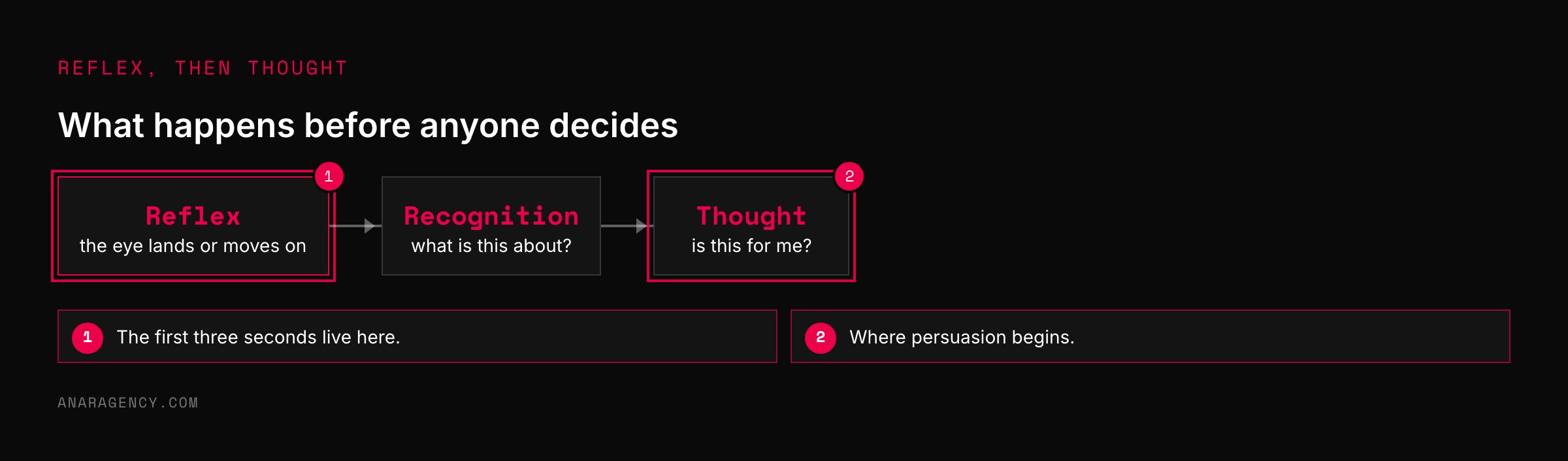
Whether it stops is not a judgment about your offer. The viewer has not read or heard anything yet. It is a reflex.
Attention researchers describe some features as salient: they stand out from their surroundings and pull attention automatically. Contrast, motion, and faces are the classic examples.
A sudden change triggers a built-in response as well. The body turns toward a new stimulus before deciding whether it matters, which is known as the orienting response.
And an object that grows in the visual field, as if approaching, is hard to ignore. Perception researchers call it looming, and animals from insects to humans react to it.
So the first three seconds are not about persuasion. They are about being the thing the eye lands on. The persuading starts after, and we cover it in hooks that work.
For the first frame of a video ad: something is already moving, toward the lens if possible; a face or body is front-on, looking into the camera; the first four words of the hook are on screen in a contrast box; there is one hero element; the frame opens a question without answering it; and it produces a fast feeling such as surprise. Use at least four. Check any opener by asking who is in it, what is happening, and where.
The opener must belong to the ad, and each version should be tested on three-second retention.
What holds the eye and what loses it
There is a body of advertising research on this. One influential study, published by the UK's advertising trade body in 2019, is called Lemon.
Its author, Orlando Wood, argued that advertising had become flatter and more abstract, and that this was making it less effective. He tied the difference to how the brain attends to the world.
The practical version is a contrast. What holds attention is living things, faces, a clear sense of place, and something visibly happening.
What loses it is flat graphics, abstract shapes, and a screen full of words with nobody in it.
It gives a three-part test for any opening shot. Who is in it? What is happening?
Where is it? If you cannot answer all three by looking at one frame, the eye has nothing to hold.
Frame Builders: the Six Rules
The people who make ads that stop a scroll are not guessing. They build the first frame deliberately. We call them Frame Builders.
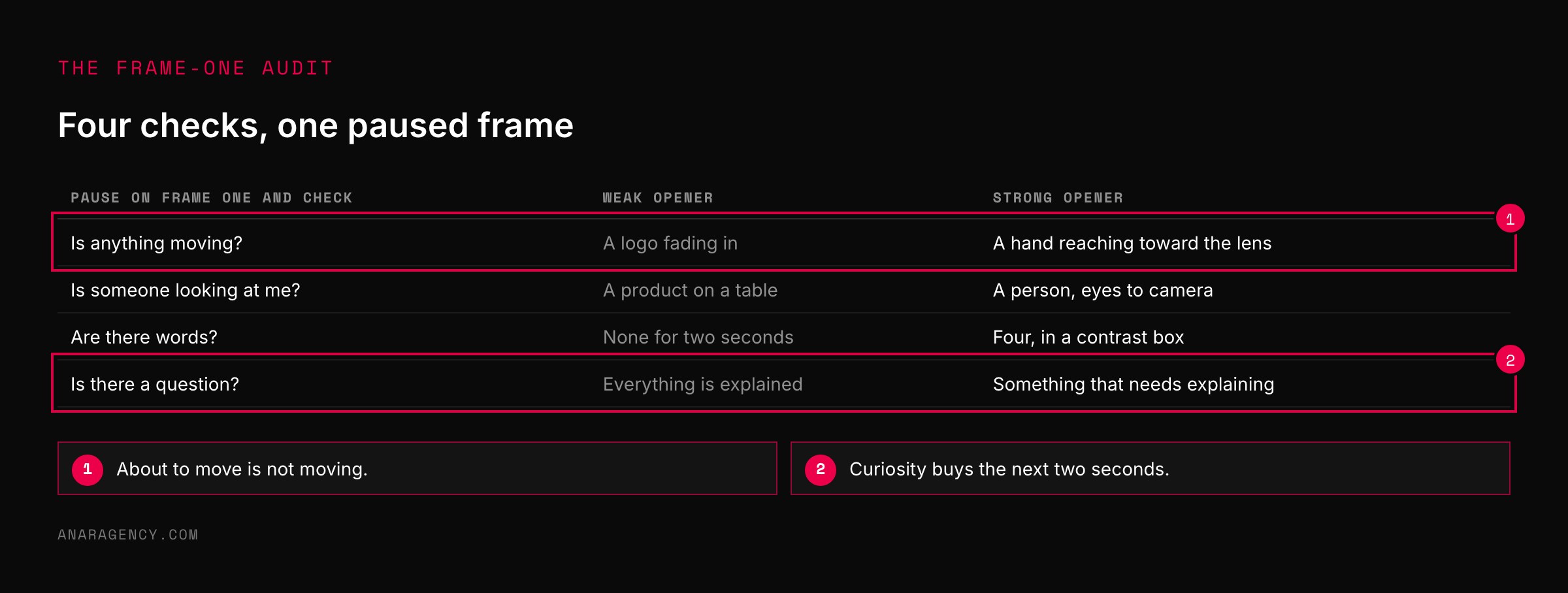
1. Something is already moving. Not about to move.
Moving at frame one, and toward the lens if you can. A hand reaching out. A door swinging open.
A person mid-step.
2. A face or a body, front-on. A person looking into the camera.
Eye contact is the strongest pull there is.
3. Four words in a box. The first words of the hook, on screen from the first frame, in a high-contrast box.
Many people watch with the sound off.
4. One hero element. One thing to look at.
A split screen, a collage, or a busy background divides the glance, and a divided glance moves on.
5. Open a question. Show something that needs explaining and do not explain it yet.
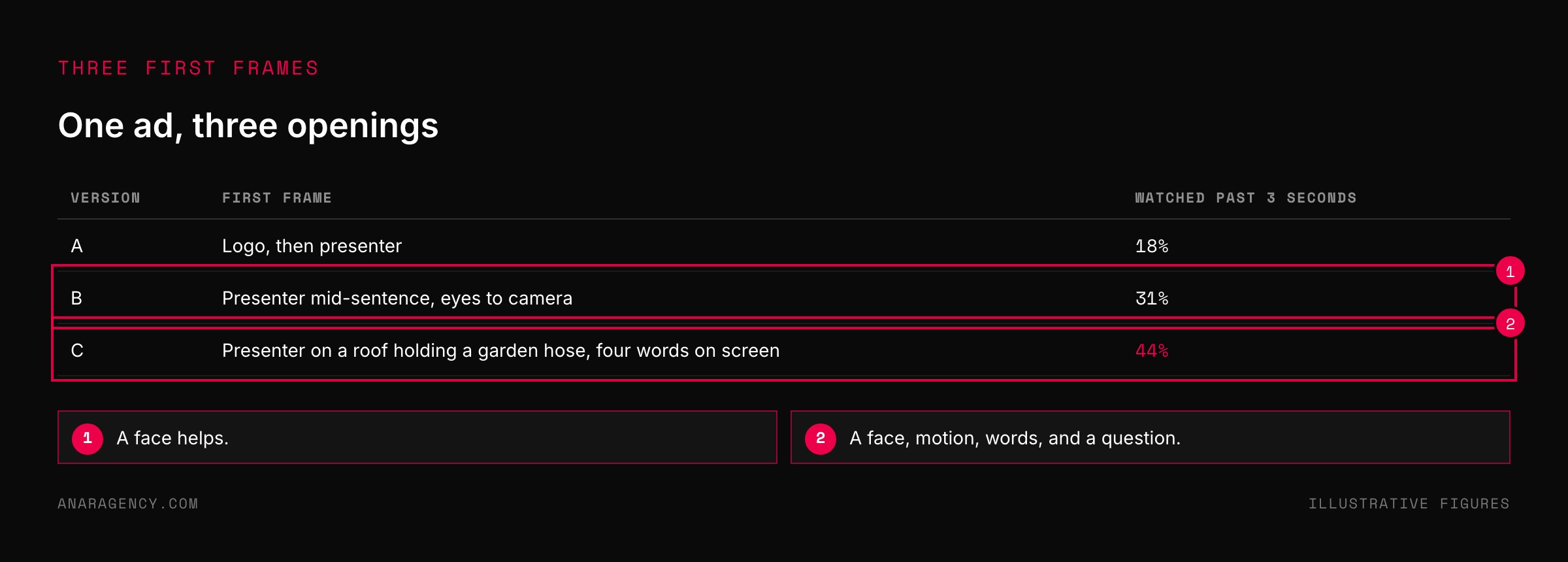
A roofer holding a garden hose on a roof. Curiosity keeps the thumb still for the next two seconds.
6. A fast feeling. Surprise, unease, awe, amusement.
Calm and pleasant is invisible. Use at least four of the six in any opener.
"Is this not just clickbait?"
It can be. An opening that grabs the eye and has nothing to do with what follows is a trick, and viewers punish it by leaving at second four.
The test is whether the opener belongs to the ad. The hose on the roof has to be explained, and the explanation has to be the point.
It is also a matter of fairness. An image that shocks by showing something false, or that implies a result the product does not deliver, is misleading whatever it does for watch time.
And you do not need a studio. Every rule here can be met with a phone: a real person, facing the lens, already in motion, with four words on screen.
What you do need is to test. Shoot the same ad with three different first frames and compare how many viewers stay past three seconds. That metric is one of the ones we explain in reading ad data.
The formats these openers sit on top of are set out in the format library.
What to read next, and why
Alfred L. Yarbus (encyclopedia entry): The eye-tracking experiments and the famous traces of where people look.
Lemon (IPA publication page): The study on why flat, abstract advertising loses attention.
Looming (encyclopedia entry): Why something approaching the viewer is so hard to ignore.
Orienting response (encyclopedia entry): The reflex that turns us toward anything new.
So the simple takeaway is this: pause your ad on its very first frame. If nothing is moving, nobody is looking at you, and there are no words, that frame is why people scroll past.
Questions executives ask
Why are the first three seconds of a video ad so important?
Because the decision to keep watching is made by reflex before the viewer has taken in the message. If the opening frame does not capture the eye, nothing after it is seen.
How do you stop the scroll with a video ad?
Start with motion already under way, a person facing the camera, the first words of the hook on screen in a high-contrast box, a single clear subject, and something surprising or unexplained. These pull attention automatically.
What grabs attention fastest in a video?
Movement, especially toward the viewer, faces and eye contact, strong contrast, and sudden change. Eye-tracking research going back to the 1960s shows the eye goes to faces first and returns to them most often.
Should video ads have text on screen at the start?
Yes. Many people watch with sound off, so putting the first few words of the hook on screen from the first frame lets the message register either way. Keep it to about four words.
How do I test a video hook?
Make three versions of the same ad that differ only in the opening frames, run them to the same audience, and compare the share of viewers who watch past three seconds. Keep the winner and test again.

Filip Kovacevic is the founder of Anar Agency in Phoenix. He spent five years running SEO, Meta ads, email, and content for medical practices across the United States, and now does the same work for healthcare, home-service, legal, and professional-service businesses, alongside AI implementation. More from Filip →
Talk it through in 15 minutes
Bring one AI question from this article. We will tell you what we would do, whether or not you hire us.
Book a 15-Min Chat →