Email as the Profit Center of a Service Business
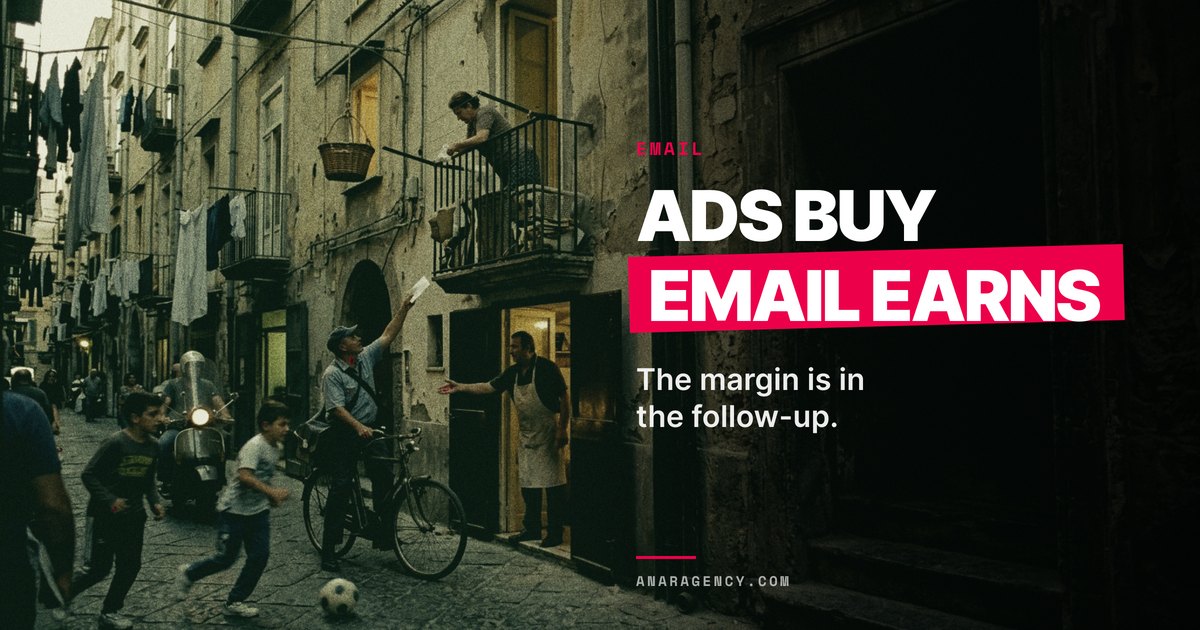
For most service businesses, advertising buys the lead and email earns the profit. An ad click costs money every time. An email to someone who already enquired costs almost nothing, and that person is far more likely to buy.
So the margin sits in four kinds of email: a fast reply to every enquiry, a short series of follow-ups after each quote, a useful weekly note to the whole list, and check-ins with past customers. Measure ads on the cost of a lead and measure email on what each lead goes on to spend.
Four hundred people, 1978
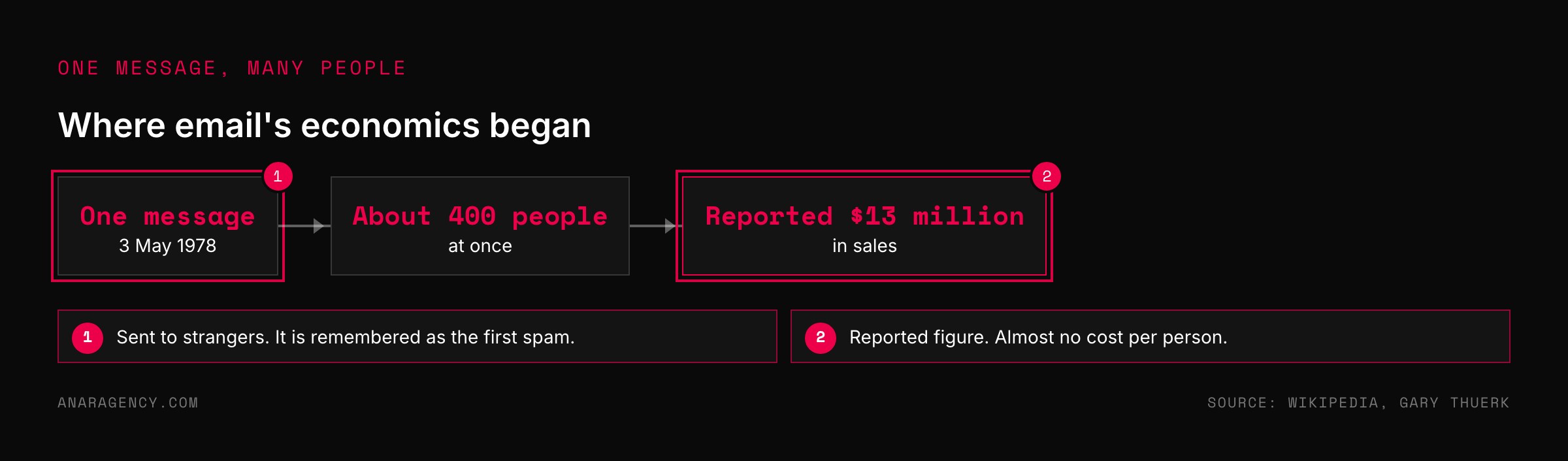
On 3 May 1978 a marketing manager at a computer company wanted to tell people about a new machine.
He had access to the network that would later become the internet. So instead of writing to prospects one at a time, he sent a single message to about 400 of them at once.
Some recipients were furious. He was told never to do it again. It is remembered as the first spam.
It also reportedly generated 13 million dollars in sales.
Nobody should copy what he did. He wrote to strangers who had not asked. But the arithmetic he stumbled on has held for nearly fifty years: a message to many people at once, at almost no cost per person.
Ads buy the lead. Email makes the margin.
Most service businesses look at advertising and ask if it is profitable. Often the honest answer is: barely.
A click costs what it costs. Some clicks become enquiries. Some enquiries become jobs.
When the sums are done, the first job from a new customer often just about pays for finding them.
That is not failure. It is what acquisition is. The profit comes after.
It comes from the quote that was not accepted the first day and is accepted the third time you write. It comes from the customer who returns next spring. Marketers add those up as customer lifetime value.
Email is the cheapest way to reach all of those people. Survey data from the email firm Litmus found that 35 percent of companies report a return of 10 to 36 dollars for every dollar spent on email.
Treat that as a survey of what marketers report, not a promise. The direction is the point. We work out how much you can pay for a lead in your maximum allowable cost.
Ads acquire, often near break-even. Email earns the margin, because the people it reaches have already been paid for. Send four kinds: a fast reply to every enquiry, a short follow-up series after every quote, a useful weekly note to everyone, and check-ins with past customers.
Automate the first two. Write as a named person in plain text. Give far more than you ask.
Measure what a lead goes on to spend, not open rates. Send only to people who asked, authenticate your domain, and keep complaints under 0.3 percent.
The Email Profit Center: four emails
You do not need a newsletter empire. A service business needs four kinds of email, and most are sending one or none.
The fast reply. Within minutes of an enquiry. It confirms you received it, says who will call and when, and answers the most common question.
Speed matters more here than polish, as we show in the conversion-first audit.
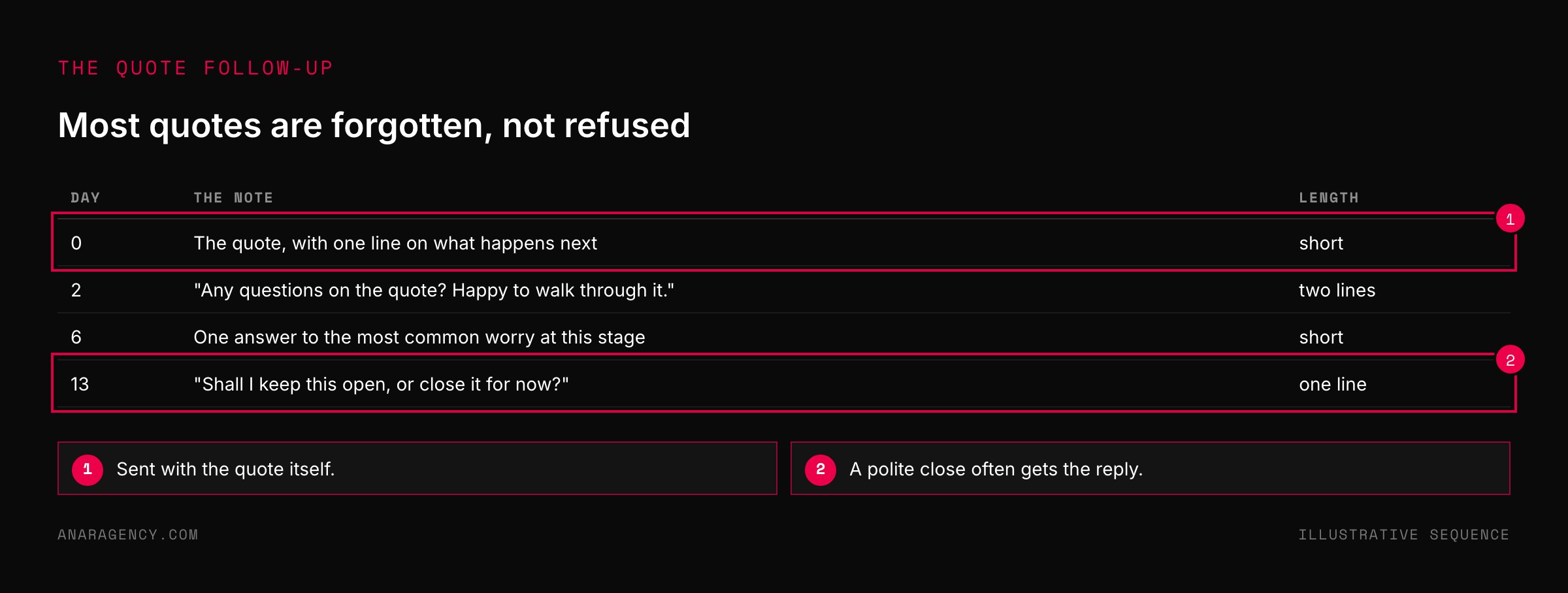
The quote follow-up. Three or four short notes across two weeks after a quote goes out. Most quotes are not refused.
They are forgotten.
The useful weekly. One thing worth knowing, to the whole list. No pitch most weeks.
Its job is that when the need arises, yours is the name in the inbox.
The past-customer check-in. A seasonal reminder. A note when the service is due.
A request for a review or a referral.
Three of those four go to people who have already raised a hand. Not one of them requires a new lead.
That is why this is where the profit is. The cost of finding these people has already been paid.
List Owners: what they do differently
Some firms seem calm about rising ad costs. They are not better at ads. They own something the ad platforms cannot reprice.
We call them List Owners.
They collect the address every time. Every enquiry, every quote, every job. With permission, and with a plain statement of what will be sent.
They write like a person. Plain text, a few short paragraphs, from a named human. It reads like a note from someone you know.
It is also less work.
They automate the first two. The fast reply and the quote follow-up are written once and sent by the system. Nobody has to remember.
They give far more than they ask. Most emails teach. Offers are occasional.
We set out the ratio and the reasons in the Promotion Cap.
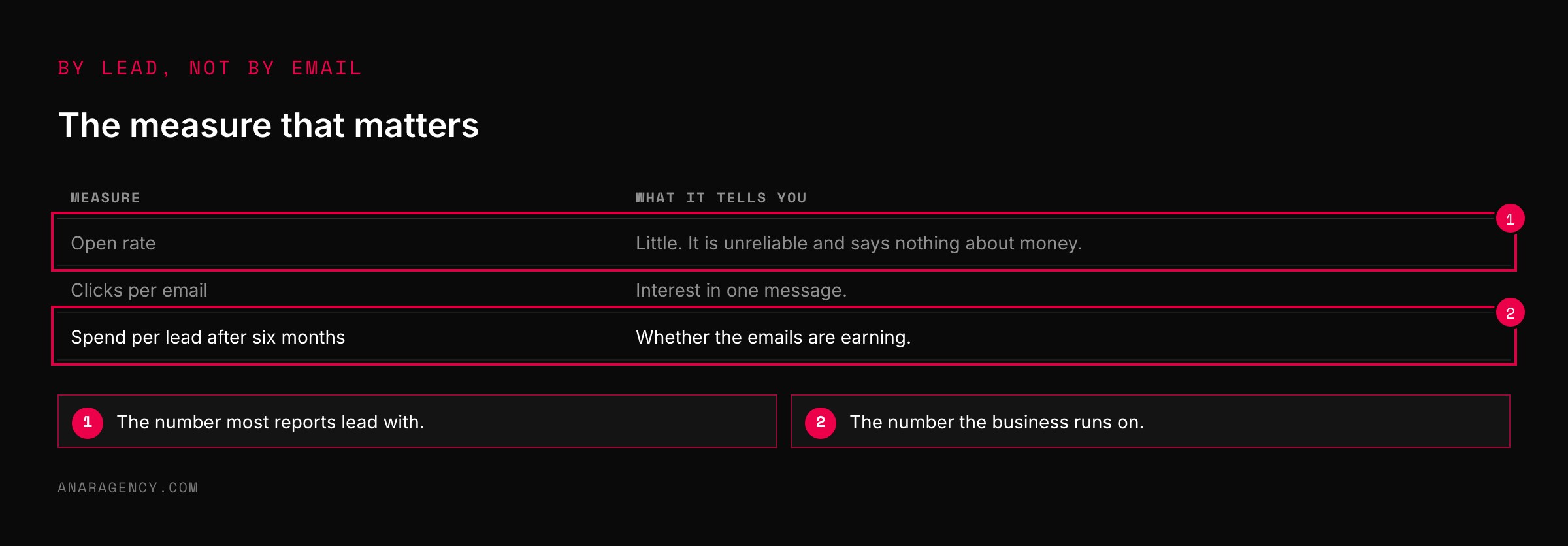
They measure by lead, not by email. Open rates say little. The question is what a lead who joined in March had spent by September.
And they regard the list as an asset. An ad account can be suspended and a social following can lose its reach overnight. A list of people who asked to hear from you goes wherever you go.
"Nobody reads email any more"
You may believe email is finished. It is the most common objection and it mistakes one kind of email for all of it.
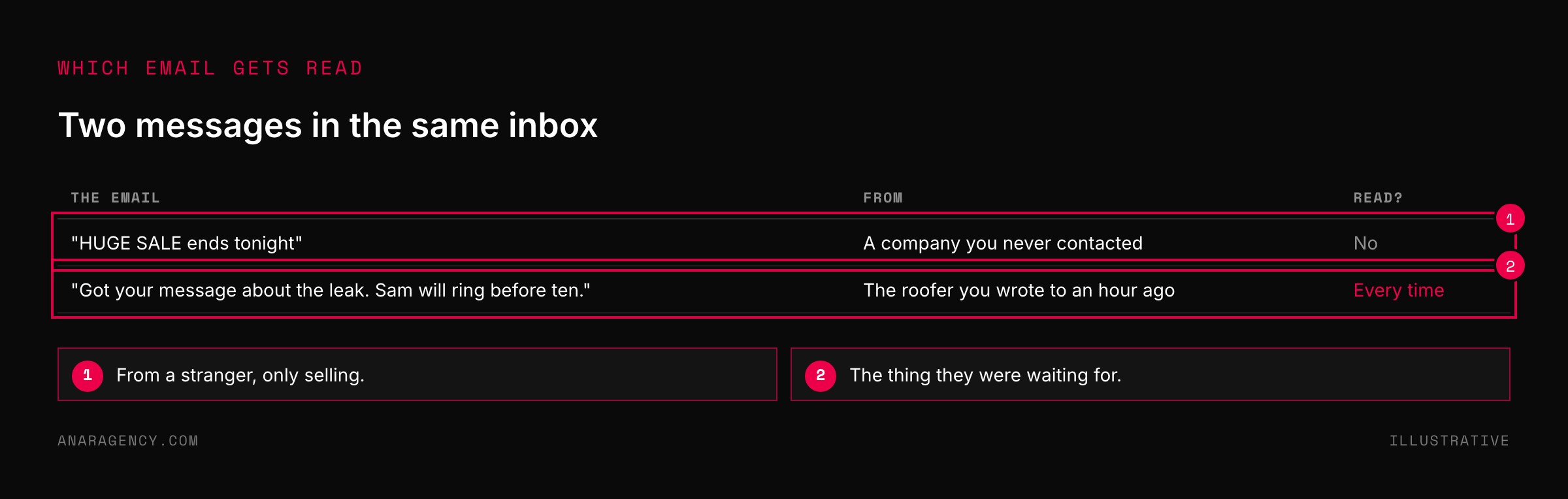
People ignore email from strangers and email that only sells. They read email from a business they have just contacted about a problem they have right now.
A reply to your own enquiry is not marketing to you. It is the thing you were waiting for.
What has changed is the standard. Gmail's sender guidelines tell senders to keep spam rates below 0.3 percent. Senders of more than 5,000 messages a day must also offer one-click unsubscribe.
Authenticate your sending domain too. These rules reward exactly the kind of email described here and punish the kind people hate.
The law matters as well. In the United States the CAN-SPAM Act requires a truthful subject line, a real postal address, and a working way to opt out. Other countries are stricter and require consent first.
Send only to people who asked.
What to read next, and why
Gary Thuerk (encyclopedia entry): The 1978 message, the reaction, and the reported result.
The ROI of Email Marketing (industry survey): What marketers report earning per dollar spent on email, with the caveats of self-reported data.
Email sender guidelines (Google documentation): The technical and complaint-rate rules that decide whether your mail arrives.
Customer lifetime value (encyclopedia entry): How to add up what a customer is worth beyond the first sale.
So the simple takeaway is this: write one email that goes out within five minutes of every enquiry, and three short ones that follow every quote. That is most of the profit, and it takes an afternoon.
Questions executives ask
Does email marketing work for service businesses?
Yes, particularly for following up enquiries and quotes and for bringing past customers back. Those people already know the business, so email reaches them at almost no cost, while advertising pays for each new click.
What emails should a service business send?
Four kinds: an immediate reply to every enquiry, three or four short follow-ups after each quote, a useful weekly note to the whole list, and periodic check-ins with past customers for reminders, reviews, and referrals.
What is the ROI of email marketing?
It varies widely. In survey data published by Litmus, 35 percent of companies reported a return of 10 to 36 dollars for every dollar spent. That is self-reported by marketers and should be read as an indication, not a guarantee.
How many times should I follow up on a quote?
Three or four short messages over about two weeks is a sensible starting point. Most quotes that go quiet were not rejected. The customer got busy, and a brief, helpful reminder is often all it takes.
What rules apply to sending marketing email?
In the United States the CAN-SPAM Act requires accurate headers and subject lines, a physical address, and a working opt-out. Gmail also tells senders to keep spam complaints under 0.3 percent, and bulk senders must offer one-click unsubscribe. Many other countries require prior consent.

Filip Kovacevic is the founder of Anar Agency in Phoenix. He spent five years running SEO, Meta ads, email, and content for medical practices across the United States, and now does the same work for healthcare, home-service, legal, and professional-service businesses, alongside AI implementation. More from Filip →
Talk it through in 15 minutes
Bring one AI question from this article. We will tell you what we would do, whether or not you hire us.
Book a 15-Min Chat →