Most of Your Market Is Unaware: How to Move Them
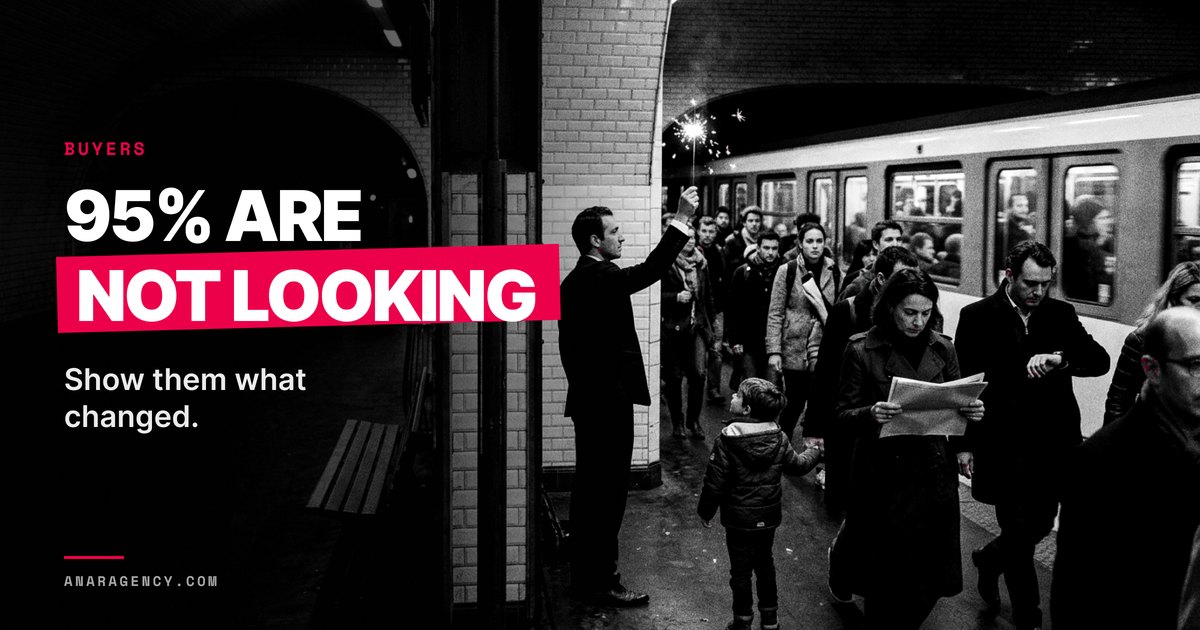
At any one time most of your market is not looking for what you sell. Research on business buyers puts the share at around 95 percent. The few who are looking get all the advertising, so reaching them is crowded and costly.
The larger group cannot be reached by describing a solution, because they have not noticed a problem. People notice change, not constants. So show them something that has moved in their world, show why it matters to them, and give them one small way to respond.
That builds the next group of buyers before competitors reach them.
The gorilla nobody saw
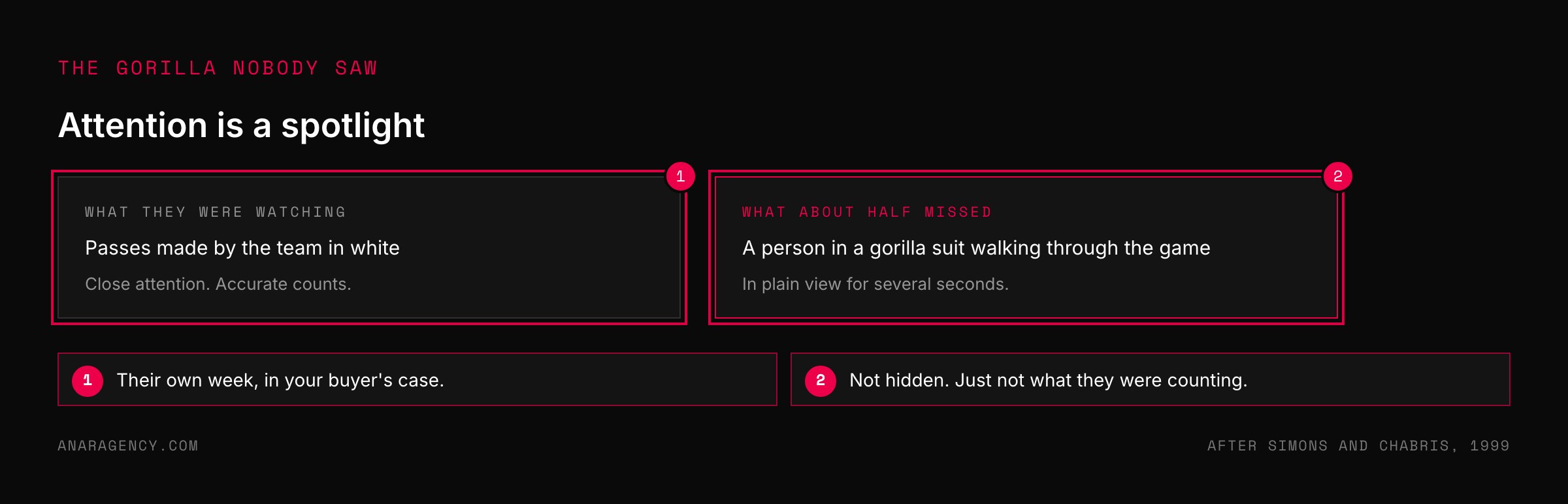
In 1999 two psychologists showed people a short video of students passing basketballs and asked them to count the passes made by the team in white.
Partway through, a person in a gorilla suit walks into the middle of the players, faces the camera, thumps its chest, and walks off.
About half the viewers did not see it. When told, many refused to believe it had been there.
They were not careless. They were paying close attention, to something else. Psychologists call the effect inattentional blindness.
Your advertising is the gorilla. For most of your market, the count they are busy with is their own week.
Ninety-five and five
Now a number. Researchers at a marketing science institute looked at how often businesses buy things like software, banking, and professional services.
Their conclusion is known as the 95-5 rule. At any one time, roughly 95 percent of business buyers are not in the market for a given category. About 5 percent are.
The exact split depends on how often the thing is bought. The shape holds almost everywhere: the people shopping today are a small slice of the people who will ever buy.
Nearly all direct advertising aims at the slice. It targets searches, comparisons, and people who already know what they want.
That is why it is expensive. Every competitor is bidding on the same few people, and when that group is used up, results fall and nobody can say why.
There is also a trap in research. The customers you can interview are, by definition, people who became aware. Copy built only from their words speaks to people already looking.
Most of a market is not looking at any one time. They cannot be reached by describing a solution, because people notice change and stop noticing constants. Three steps move them: show something that has changed, connect it to what they care about, and offer one small way to respond.
Keep most spend on buyers who are looking, put a steady share toward those who are not, and judge that share on branded search growth over a year. The change you show must be real and sourced.
People notice what moves
So how do you reach someone who is not looking? Start with how noticing works.
Hold your arm perfectly still for a minute and you stop feeling it. A sound that never changes fades from hearing. Researchers call this habituation: the response to a constant thing declines until it is gone.
The opposite is also built in. A sudden change in the surroundings pulls attention toward it without any decision, a reflex known as the orienting response.
Put plainly, people are aware of what changes and unaware of what stays the same.
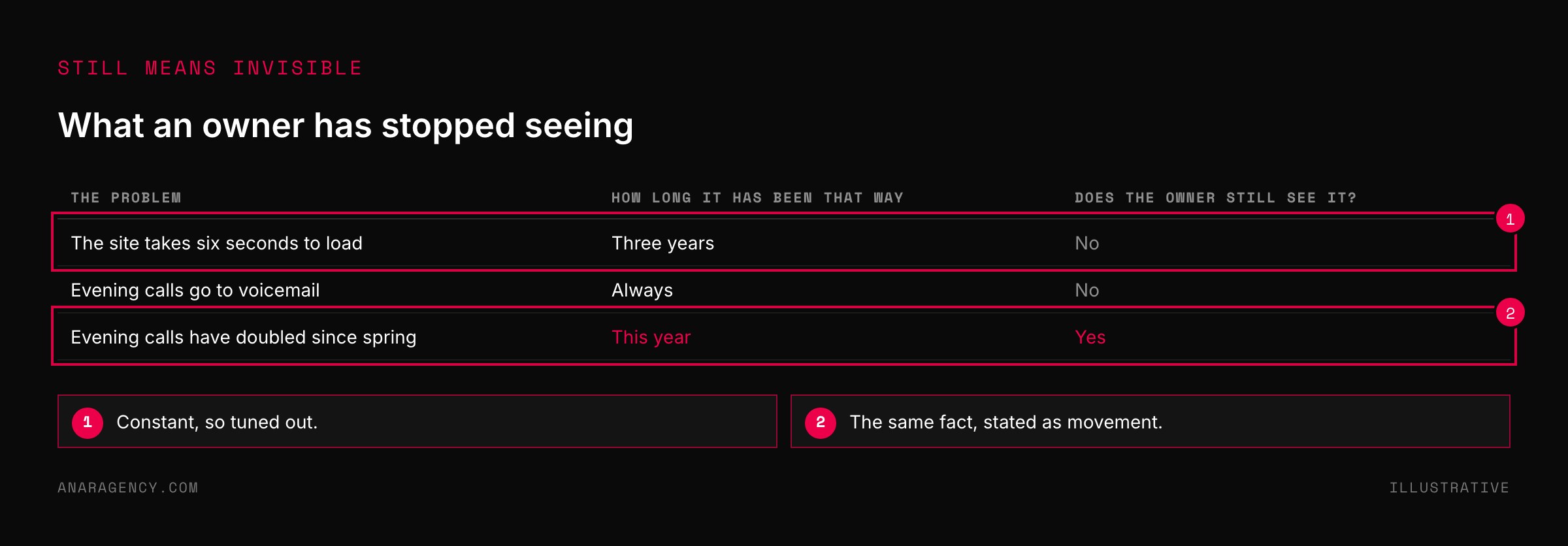
A buyer's ongoing problem has usually stopped moving. The slow website, the leads nobody calls back, the report nobody reads. It has been that way for years, so they no longer see it.
Describing your solution to that person does nothing. There is no problem in view for it to solve.
Motion Makers: three steps
A few businesses grow their own demand instead of fighting over what exists. They do not advertise solutions to the unaware. They show movement.
We call them Motion Makers.
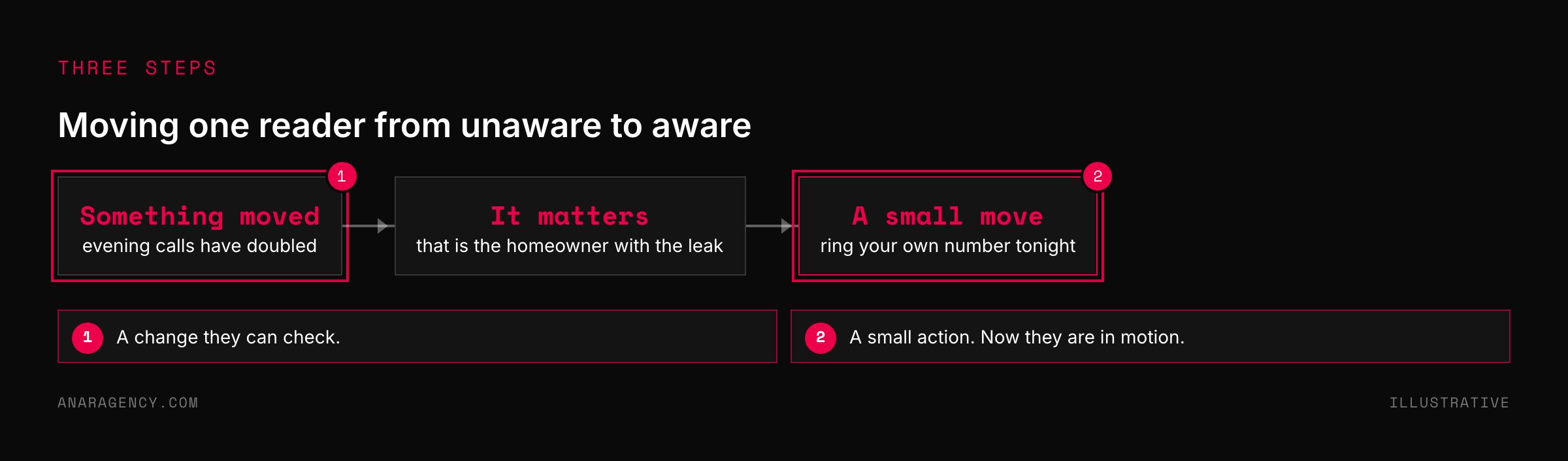
They show something that changed. A new rule. A price that doubled.
A habit buyers have dropped. A result one firm in the reader's trade just got. Change is the only thing an unaware person will see.
They connect it to what the reader cares about. Movement that touches nothing important is tuned out again within seconds. Tie it to income, safety, standing, or family, and it stays.
They give one small way to respond. Not the full service. A check, a number to look up, a question to ask a supplier.
The reader moves a little, and now they are in motion.
Take a made-up example for a roofer. "Calls after six in the evening have doubled, and most go to voicemail" is step one. "That is the homeowner with the leak" is step two.
"Ring your own number tonight and see what happens" is step three.
None of that mentions a product. It makes the reader aware of a problem, and the first voice to name a problem is usually the one trusted to fix it. How to open such a message is covered in hooks that work.
"Unaware people do not buy. Why spend on them?"
You may reason that money spent on people who are not shopping is wasted. This month, most of it is. That is the honest cost.
The return comes later. When one of those people enters the market, the name they already know has a head start that no bid can buy.
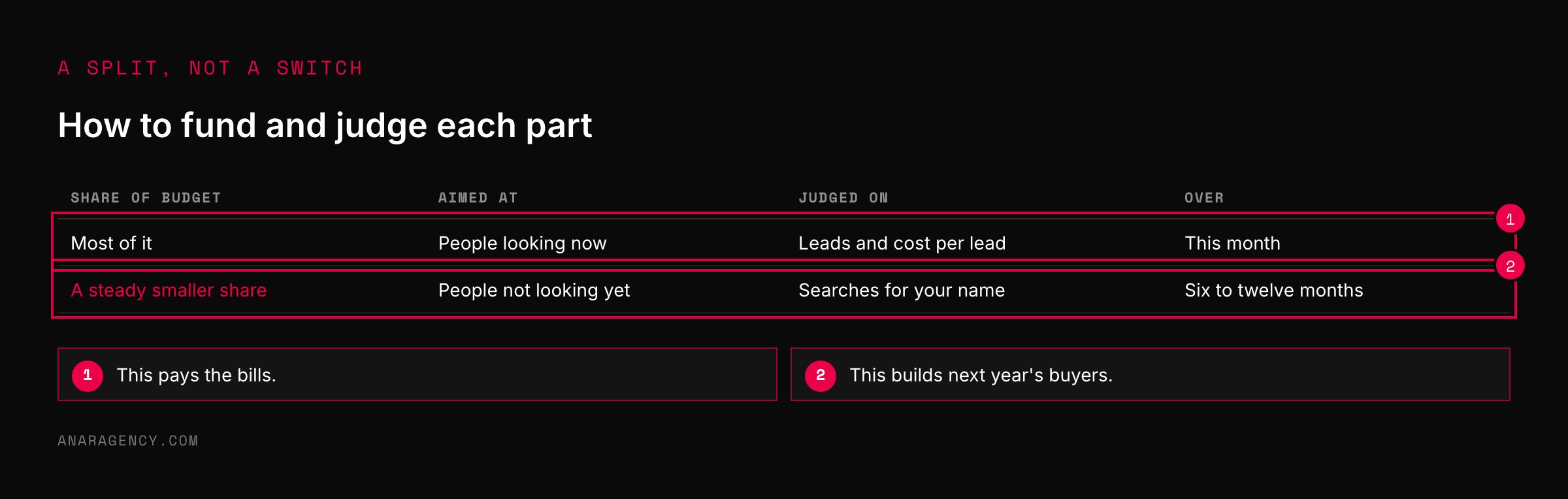
So this is a split, not a switch. Keep advertising to the people who are looking, since that pays the bills. Put a steady, smaller share toward the people who are not.
Measure the two differently. Judge the first on leads this month. Judge the second on whether more people search for you by name over a year, which we cover in reading ad data.
And keep it true. The change you point to has to be real and sourced. Inventing a threat to wake people up is the fastest way to lose the trust you were trying to build.
The cheapest way to do this is content. One real change, explained once and published in many places, is the subject of all content is about change.
What to read next, and why
The 95-5 rule (research summary): The original argument that most buyers are out of the market at any time, and what that means for advertising.
Inattentional blindness (encyclopedia entry): The gorilla experiment and the research around it.
Habituation (encyclopedia entry): Why a constant thing disappears from attention.
Orienting response (encyclopedia entry): The reflex that turns attention toward change.
So the simple takeaway is this: find one thing that has changed in your buyer's world this year, and tell them about that before you tell them about you.
Questions executives ask
What is an unaware market?
The part of a market that has a problem, or will have it, and is not looking for a solution. They may not have noticed the problem at all. At any given time this group is far larger than the group actively comparing options.
What is the 95-5 rule in marketing?
A finding from research on business buying that, at any one time, roughly 95 percent of potential buyers are not in the market for a given category and about 5 percent are. The exact share depends on how often the category is purchased.
How do you market to people who are not looking?
Show them a change in their world, because people notice movement and ignore what stays the same. Connect the change to something they care about, then offer one small action. Do not lead with the product.
Is it worth advertising to people who are not ready to buy?
As a share of the budget, yes. It rarely pays back in the same month, but buyers who already know a name when they enter the market are easier and cheaper to win. Keep the majority of spend on active buyers.
How do I measure awareness advertising?
Not by leads this month. Track whether more people search for your business by name over six to twelve months, and whether cost per lead from active buyers falls as recognition grows.

Filip Kovacevic is the founder of Anar Agency in Phoenix. He spent five years running SEO, Meta ads, email, and content for medical practices across the United States, and now does the same work for healthcare, home-service, legal, and professional-service businesses, alongside AI implementation. More from Filip →
Talk it through in 15 minutes
Bring one AI question from this article. We will tell you what we would do, whether or not you hire us.
Book a 15-Min Chat →