AI Receptionist for Small Business: What It Costs and What It Catches
An AI receptionist is software that answers your phone in natural speech, at any hour, and can take a message, answer common questions, book an appointment, or pass the caller to a person. It is usually priced per minute or as a monthly fee. A full-time human receptionist covers 40 of the 168 hours in a week and earned a median of $18.27 an hour in the US in 2025.
The AI is not a replacement for that person. It catches the calls nobody was going to answer: evenings, weekends, and the second call while the first is in progress.
The undertaker and the operator
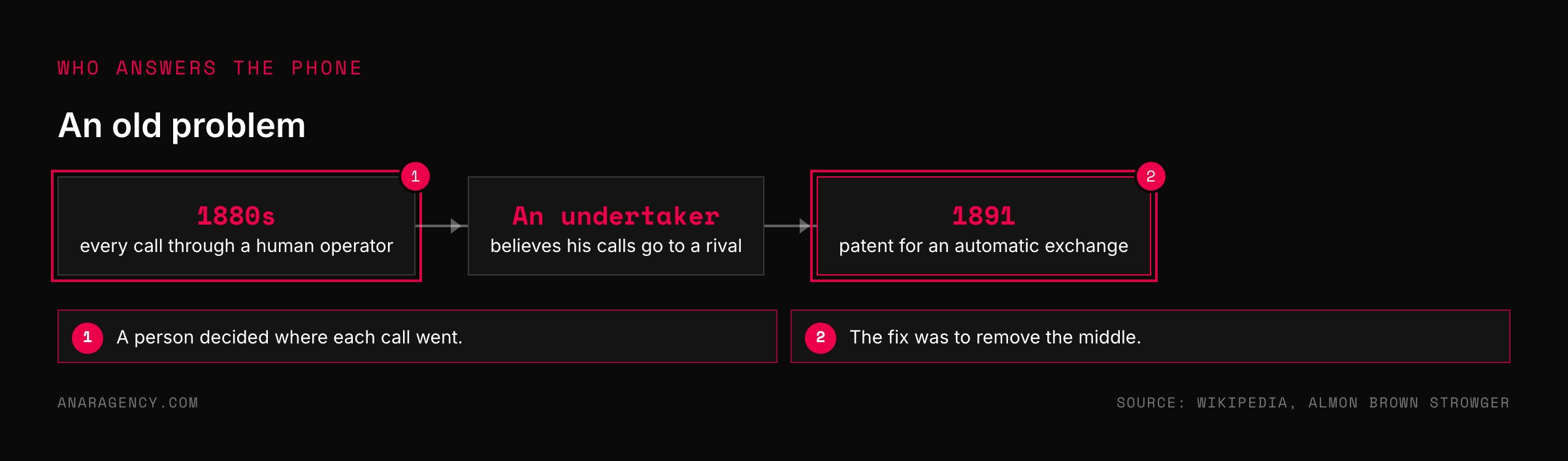
In the 1880s every telephone call went through a human operator, who physically connected one line to another.
Almon Strowger was an undertaker in Kansas City. The commonly told story is that he came to believe he was losing business because a local operator was married to a rival undertaker and was routing callers to her husband.
Whether or not that was happening, Strowger decided the fix was to take the human out of the connection. He designed an automatic exchange and received a patent for it in 1891.
The switch that bore his name spread across the world and stayed in service for most of a century.
The story is told as one about invention. For a small business it is about something plainer. Who answers your phone decides who gets the job.
The hours nobody covers
Start with arithmetic. A week has 168 hours.
A full-time receptionist is there for 40 of them. That is about 24 percent. Take out lunch, holidays, sick days, and the moments when two calls arrive at once.
That person is good value. US government figures put the median wage for receptionists at $18.27 an hour in May 2025, which is roughly $38,000 a year before taxes and benefits.
So the question was never whether to replace them. It is what happens in the other 128 hours.
For many small firms the honest answer is voicemail. And a caller with a burst pipe or a missed court date does not leave a message. They ring the next name.
Speed matters at least as much on the phone as on a web form. The best-known study of web leads found that firms responding within an hour were nearly seven times as likely to qualify the lead as those that waited an hour longer.
An AI receptionist is a message-taker that never sleeps. It should take messages, answer routine questions, book appointments, and hand over to a person. It should not advise, quote, or promise.
Judge it with one sum: missed calls a month, times the share that become jobs, times the value of a first job, against the monthly cost. Start with evenings and weekends, listen to ten calls a week, disclose that it is automated, announce recording, get consent before any automated outbound contact, and keep a human in reach.
What it does, and what it should not
An AI receptionist answers in natural speech. A caller talks to it the way they would to a person.
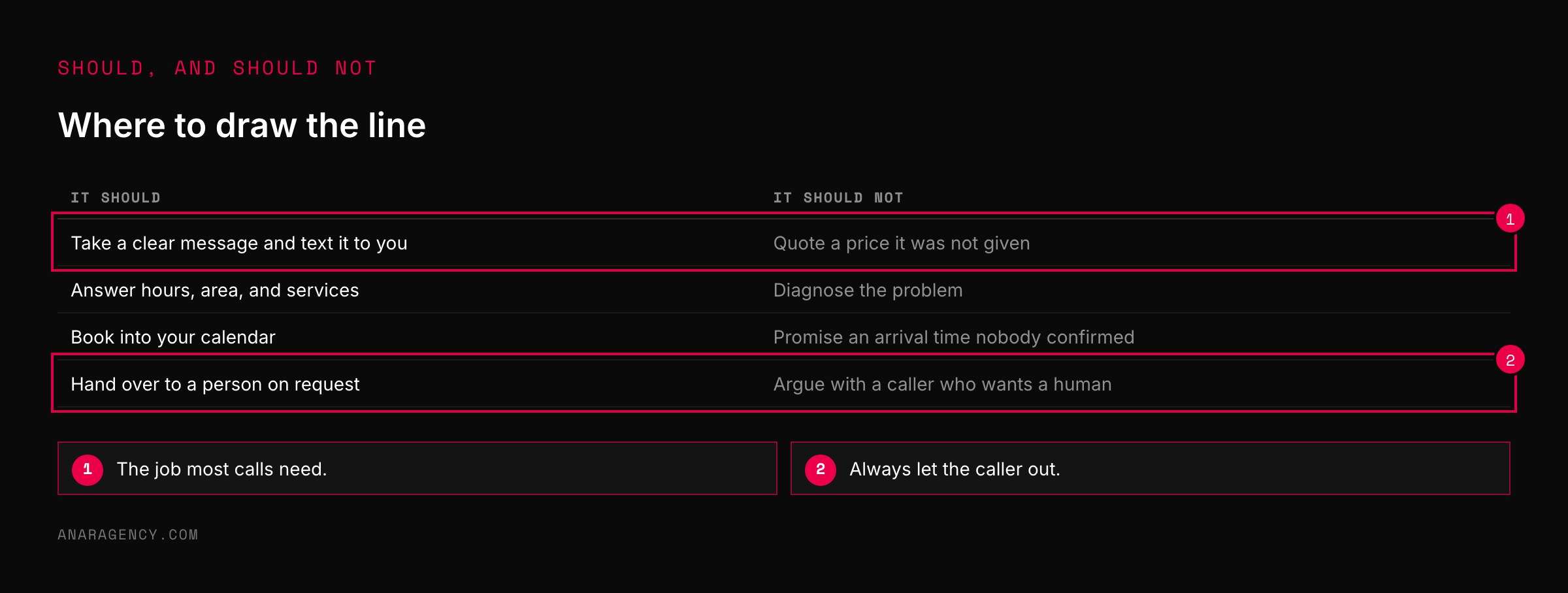
It can do four useful things. Take a clear message and send it to you by text. Answer the handful of questions you hear every day: hours, area served, whether you do a given job.
Book an appointment straight into your calendar. And hand the call to a human when the caller asks or when it is out of its depth.
What it should not do is advise. It should not quote a price it was not given, diagnose a problem, or promise an arrival time nobody has confirmed.
The useful mental model is a very good message-taker who never sleeps, not a junior member of staff.
This is the phone version of the instant layer in speed to lead. Our own service page for it is the AI receptionist.
Call Catchers: how to judge whether it pays
The firms that get a return from this did one sum before they bought. We call them Call Catchers.
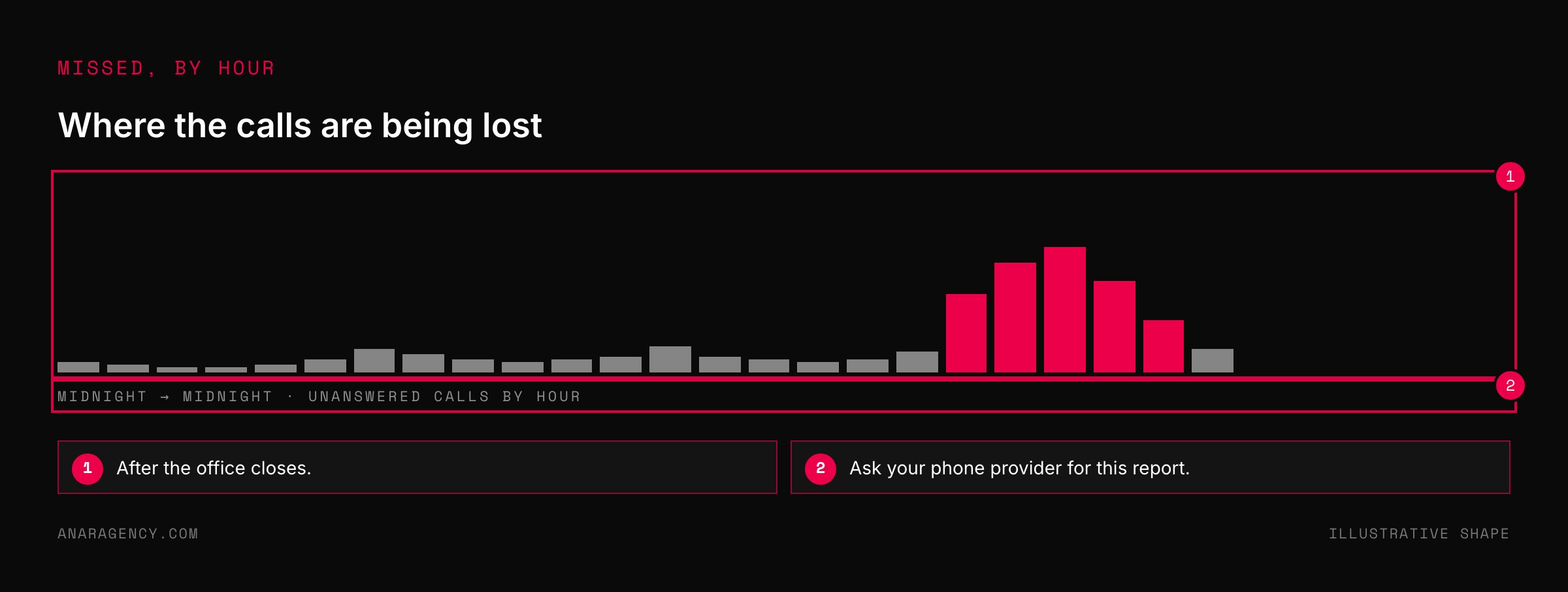
They count the calls they miss. Your phone provider can show calls that went unanswered or to voicemail, by hour. That number is the entire business case.
They get the price in writing. Per minute or per month, with setup fees and what happens above the included minutes. We do not quote vendor prices here, because they change by the month.
They do the sum. Missed calls a month, times the share that would become a job, times the value of a first job. If that is comfortably more than the monthly cost, it pays.
They start after hours. Evenings and weekends first. No existing process is disturbed, and every call caught is one that was being lost.
They listen to the recordings. Ten calls a week for the first month. You will hear where it stumbles, and each stumble is a line to add to its instructions.
They make the handover easy. "Let me get someone to call you back within the hour" is a good outcome. A caller trapped arguing with a machine is not.
"Will callers hate talking to a machine?"
Some will. Most callers want their problem dealt with, and a clear voice that takes their details at nine at night does more for them than a beep.
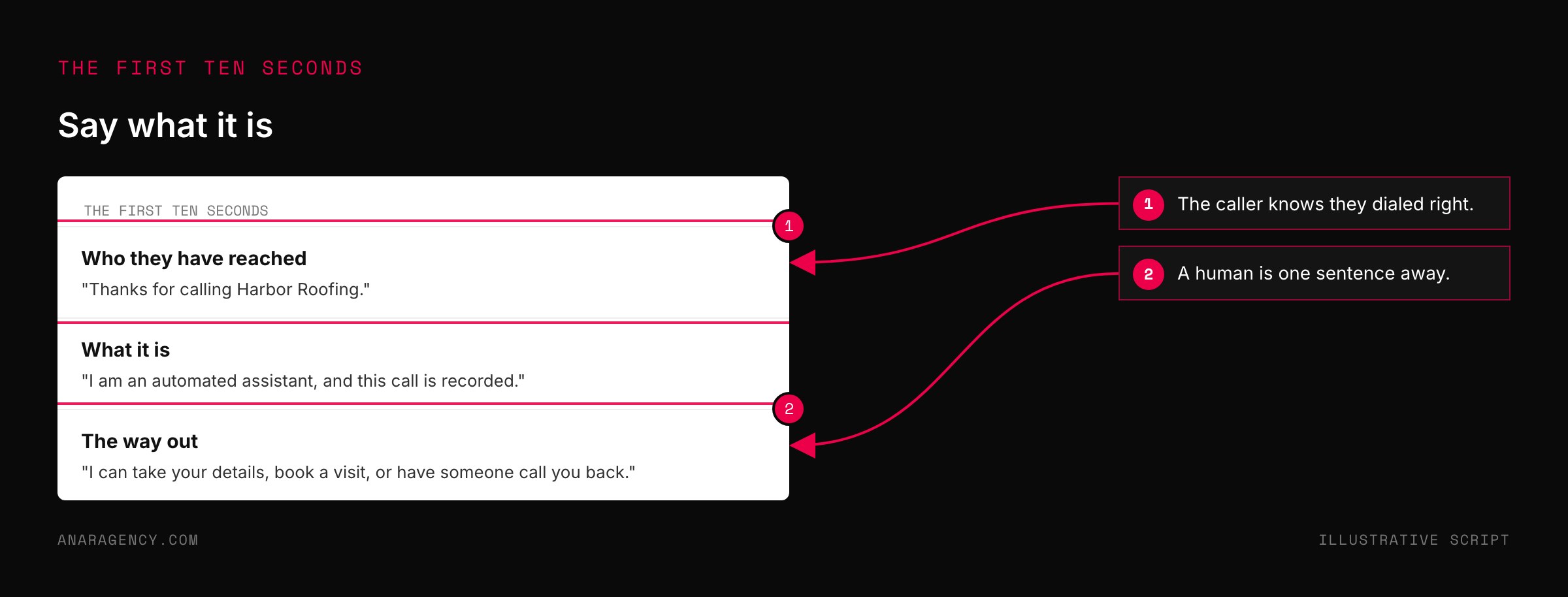
What people hate is being deceived. Say at the start that it is an automated assistant. It costs nothing and it changes how every later stumble is received.
There are legal points too. Many places restrict recording calls without consent, and the rules vary by state and country. Announce recording if you record.
Outbound calling is stricter. In February 2024 the US communications regulator ruled that calls made with AI-generated voices count as artificial under the Telephone Consumer Protection Act. That law requires prior consent for such calls.
Answering your own phone is a different matter from dialing strangers. But if the system will ever call or text people back automatically, get their permission first and take advice on the rules where you operate.
And keep a person in reach. For an emergency, a complaint, or anyone who asks, the assistant's job is to get a human on the line quickly. How to judge a product before you buy is in how to evaluate AI agents.
What to read next, and why
Almon Brown Strowger (encyclopedia entry): The undertaker, the operator story, and the automatic exchange.
Receptionists (US Bureau of Labor Statistics): Pay, numbers employed, and what the job involves.
FCC makes AI-generated voices in robocalls illegal (FCC announcement): The 2024 ruling on AI voices and the consent rules that follow from it.
Telephone call recording laws (encyclopedia entry): Consent requirements by jurisdiction.
So the simple takeaway is this: ask your phone provider for last month's unanswered calls by hour of day. If there are more than a few a week, you have your answer about whether this is worth a trial.
Questions executives ask
What is an AI receptionist?
Software that answers business phone calls in natural speech. It can take messages, answer routine questions, book appointments into a calendar, and transfer the caller to a person, at any hour of the day.
How much does an AI receptionist cost?
Vendors usually charge per minute of call time or a flat monthly fee, sometimes with a setup charge, and prices change often. Get the rate in writing and multiply it by your own call minutes. For comparison, the US median wage for a human receptionist was $18.27 an hour in May 2025.
Will an AI receptionist replace my front desk staff?
It is better used alongside them. One full-time person covers about 24 percent of the hours in a week. The AI covers evenings, weekends, and overflow, which are calls that were going to voicemail.
Do I have to tell callers they are talking to AI?
You should, and in some places rules require it. Stating at the start that the assistant is automated avoids deceiving callers. If calls are recorded, announce that too, since many jurisdictions require consent.
Can an AI receptionist make outbound calls?
Be careful. In the United States the FCC ruled in February 2024 that calls using AI-generated voices are artificial under the Telephone Consumer Protection Act, which requires prior consent. Take advice before any automated outbound calling or texting.

Filip Kovacevic is the founder of Anar Agency in Phoenix. He spent five years running SEO, Meta ads, email, and content for medical practices across the United States, and now does the same work for healthcare, home-service, legal, and professional-service businesses, alongside AI implementation. More from Filip →
Talk it through in 15 minutes
Bring one AI question from this article. We will tell you what we would do, whether or not you hire us.
Book a 15-Min Chat →