What Each Platform Is For
People open each platform for a different reason. As a working model: YouTube is for learning, Facebook for entertainment and keeping up with people, Instagram for aspiration, LinkedIn for professional reputation, and TikTok for discovery. A post succeeds when it serves the reason the person opened the app.
So shape one idea differently for each: teach it on YouTube, tell it as a story on Facebook, show it on Instagram, and advise on LinkedIn. For most B2B firms, LinkedIn and YouTube carry the most weight, because buyers go there to judge competence and learn.
Same people, different reasons
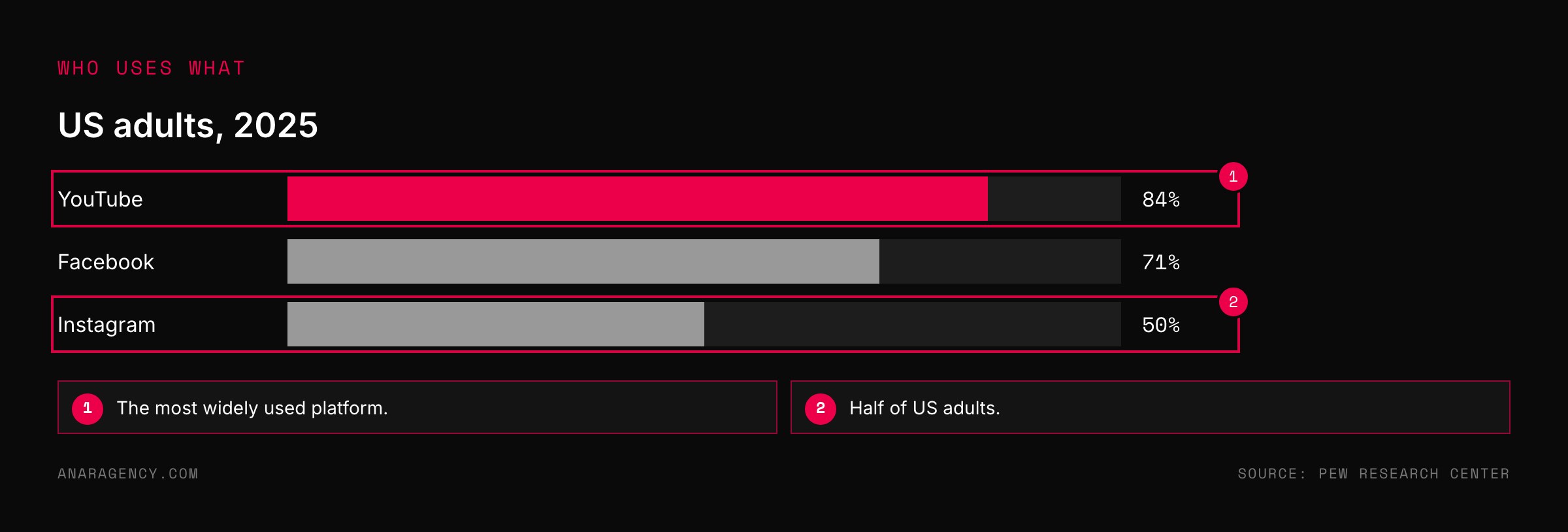
In Pew Research's 2025 survey of US adults, 84 percent said they use YouTube, 71 percent Facebook, and 50 percent Instagram.
Many of those people use all three. But they do not open all three for the same reason.
A person who opens YouTube at 9 p.m. often wants to learn how to fix something. The same person opening Facebook at lunch wants a break.
Researchers have a name for this way of thinking: uses and gratifications theory. It asks what people use a medium for, rather than what the medium does to them.
So the question is not which platform has the most people. It is what those people came to do.
What each platform is for
Here is our working model. It is a simplification, but it holds up well enough to plan with.
YouTube is for learning. People search it the way they search Google, and how-to content can keep finding viewers for years.
Facebook is for entertainment and people. Stories, humor, local news, and groups do better than lessons.
Instagram is for aspiration. People look at lives, work, and results they admire.
LinkedIn is for professional reputation. People read to look and feel competent at work, and they share what makes them look good.
TikTok is for discovery. Its feed is built around recommendations, and TikTok says follower count is not a direct factor in what it recommends.
People open each platform for a different reason: YouTube to learn, Facebook for entertainment and people, Instagram for aspiration, LinkedIn for professional reputation, TikTok for discovery. A post works when it serves that reason. Keep one idea and change its shape for each platform.
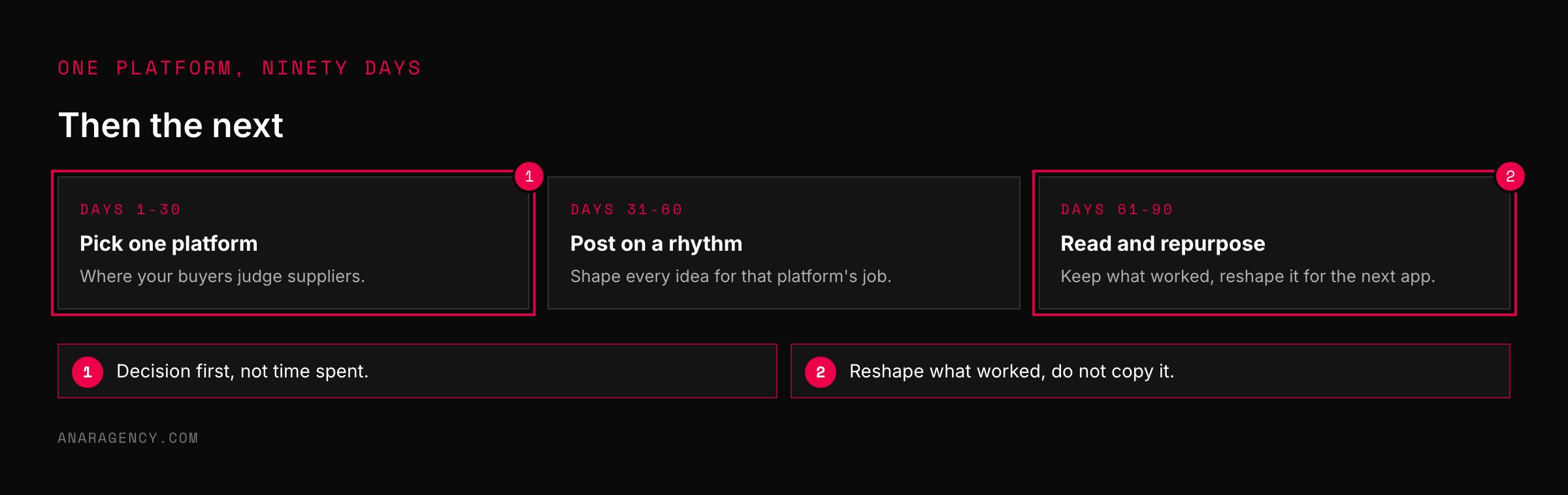
For B2B, start where buyers judge suppliers, usually LinkedIn and YouTube, commit to one primary platform for ninety days, and repurpose to the rest.
Which platform for a B2B firm
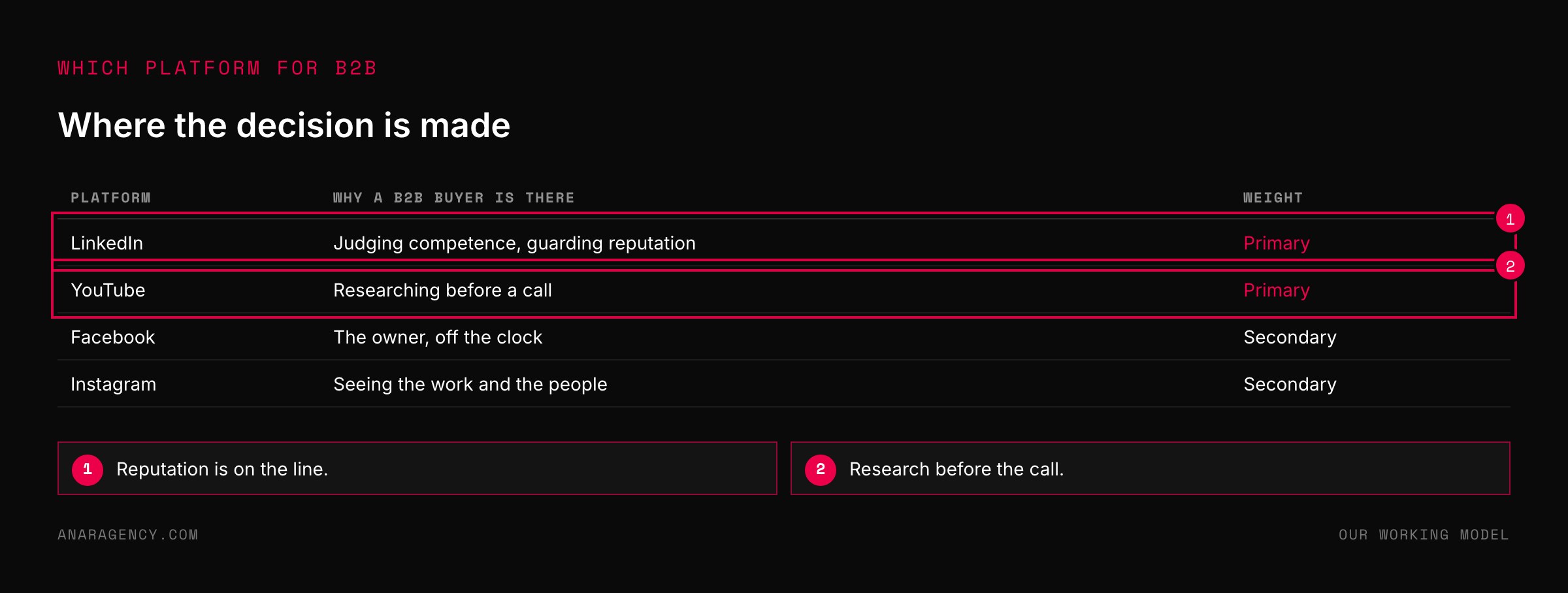
If you sell to businesses, start with the two platforms where buyers go to judge you.
LinkedIn, because your buyer's reputation is on the line when they choose a supplier. Posts that make them smarter in front of their boss get read and passed on.
YouTube, because buyers research before they call. A clear video answering the question they search is found long after it is posted.
Facebook and Instagram can still matter for B2B firms, especially local and owner-run ones. The owner who buys from you is also a person scrolling at night.
Our rule of thumb: pick one primary platform, do it properly for ninety days, and repurpose to the others. For the repurposing, see one article, twenty pieces.
One idea, four shapes
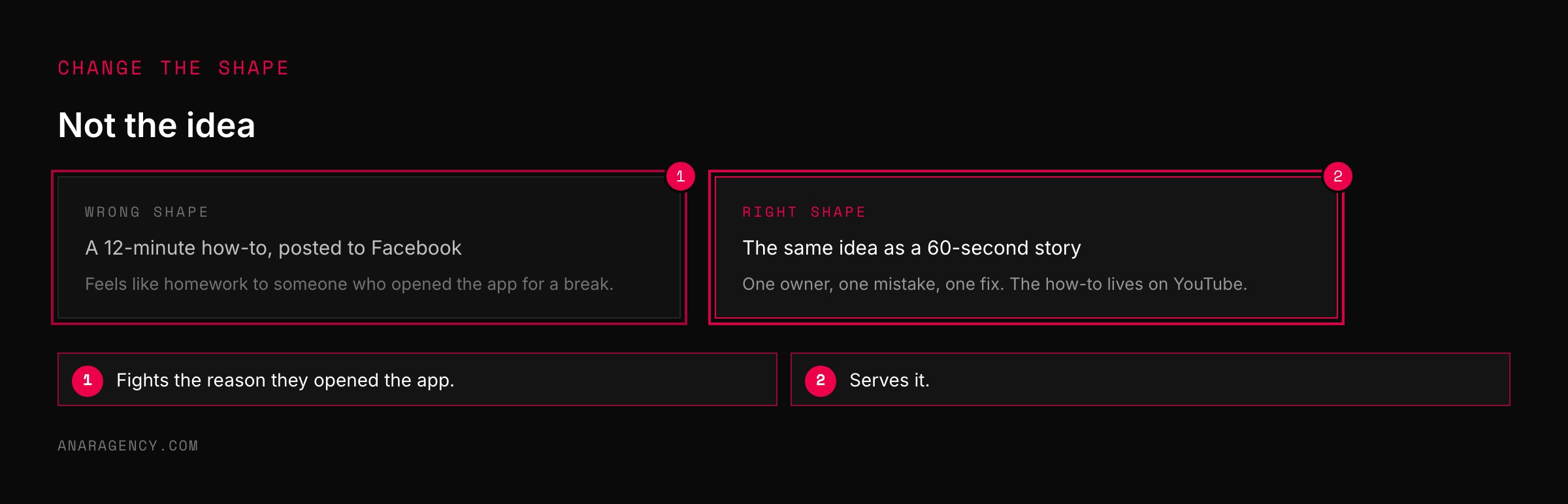
The mistake is not being on many platforms. It is posting the identical thing on all of them.
A how-to video posted on Facebook feels like homework. A personal story posted on LinkedIn without a lesson feels like oversharing.
Keep the idea and change the shape. Teach it on YouTube, tell it on Facebook, show it on Instagram, advise on LinkedIn.
The figure above shows one idea four ways. Notice the facts do not change, only the reason someone would stop for it.
It also saves work. You research once, then write four short versions instead of four new ideas.
"We do not have time for five platforms."
Then do not use five. One done well beats five done badly.
Choose by where your buyers go to make the decision, not where they spend the most time. A buyer may spend hours on Facebook and still choose a supplier after a search on YouTube.
Test before you commit. Instagram now offers trial reels, shown to non-followers first, which let you see how a piece does with strangers before your followers see it.
And remember what each post is for. A post on any platform should earn its keep in the job that platform does, not in follower count.
For why reach no longer tracks follower count, see reach is not audience size.
Test it before you believe it
Our model of what each platform is for is a starting point. Your own buyers may behave differently, and the only way to know is to measure.
Here is a simple 30-day test. Post the same idea on two platforms, each shaped for that platform's role, and track where the people who contact you actually came from.
The tracking takes one step. Add campaign tags to every link you post, which Google Analytics lets you build with its URL builder, so each visit shows which platform and which post sent it.
Then count three things per platform. Visits to your site, enquiries, and enquiries that turned into a real conversation.
Ignore likes for this test. A platform full of likes and empty of enquiries is entertaining your audience, not finding you buyers.
Expect surprises. A firm may find that one plain LinkedIn post a week brings more enquiries than daily videos elsewhere, or the reverse.
Whatever the result, it beats a guess. You now know where your buyers go to decide, from your own data.
Repeat the test every six months. Platforms change what they show people, and the place that worked last year may not be the place that works now.
Write the result down where the team can see it. It ends the argument about which platform to post on.
What to read next, and why
Social Media Fact Sheet (Pew Research Center): Who uses which platform in the US, updated regularly.
How TikTok recommends videos (TikTok newsroom): The company's own explanation of its recommendation system.
Trial reels (Meta newsroom): A low-risk way to test content with non-followers.
Uses and gratifications theory (encyclopedia entry): The research tradition behind asking what people use media for.
So the simple takeaway is this: write down why your buyer opens each app, pick the one where they judge suppliers, and shape your next idea for that reason.
Questions executives ask
Which social platform is best for B2B?
Usually LinkedIn and YouTube, because buyers use LinkedIn to judge professional competence and YouTube to research before they call. Local and owner-run B2B firms can also use Facebook.
Should I post the same content on every platform?
Keep the same idea but change the shape. People open each app for a different reason, so a lesson, a story, a visual, and a piece of advice will each fit a different platform.
What is each social media platform for?
As a working model: YouTube for learning, Facebook for entertainment and people, Instagram for aspiration, LinkedIn for professional reputation, and TikTok for discovery.
How many social platforms should a small business use?
One primary platform done properly is usually better than several done badly. Repurpose to the others once the primary one is working.
How many US adults use YouTube and Facebook?
In Pew Research's 2025 survey, 84 percent of US adults said they use YouTube and 71 percent said they use Facebook.

Filip Kovacevic is the founder of Anar Agency in Phoenix. He spent five years running SEO, Meta ads, email, and content for medical practices across the United States, and now does the same work for healthcare, home-service, legal, and professional-service businesses, alongside AI implementation. More from Filip →
Talk it through in 15 minutes
Bring one AI question from this article. We will tell you what we would do, whether or not you hire us.
Book a 15-Min Chat →