Reach Is Not Audience Size
Most feeds now recommend posts to people who do not follow you, so each post earns its own reach. TikTok says follower count is not a direct factor in its recommendations, and Instagram lets you test reels on non-followers first. Followers still help, but a small account with a strong post can outreach a large account with a weak one.
So stop judging content by follower count. Watch four numbers per post instead: views from non-followers, average view duration, shares and saves, and replies or messages.
What TikTok said about followers
In June 2020 TikTok published an explanation of how its For You feed chooses videos. One sentence in it changed how many people think about social media.
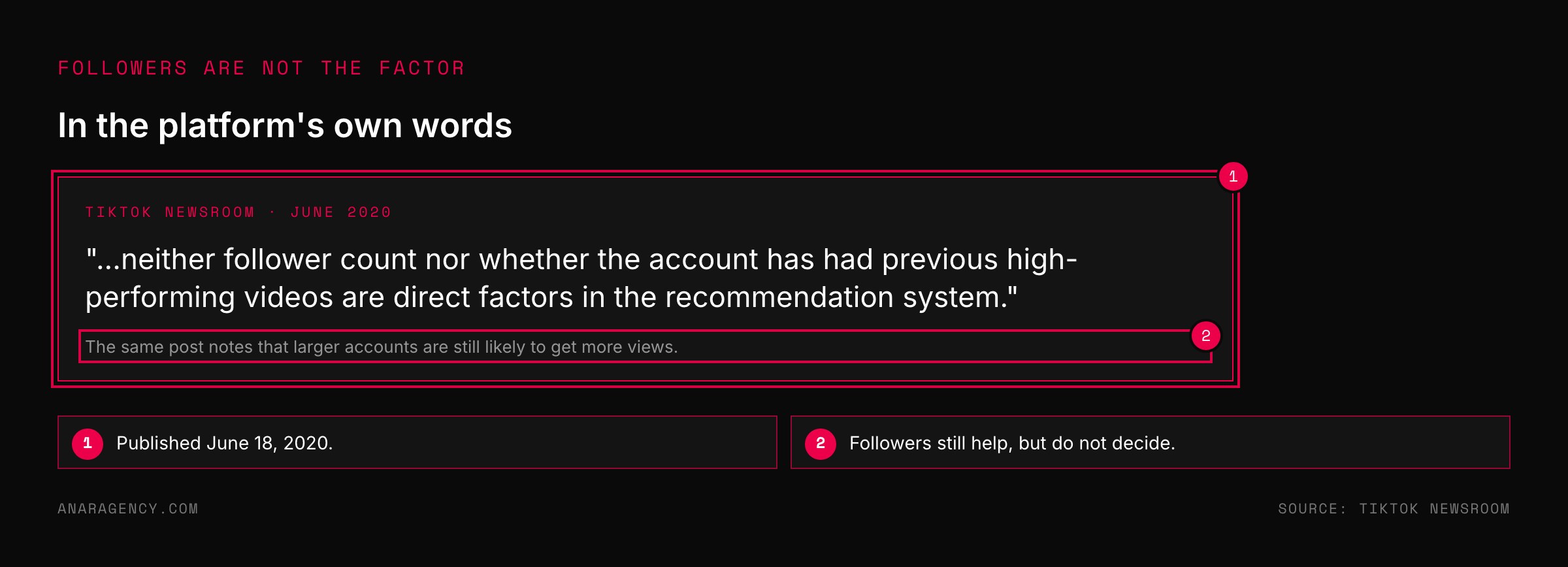
TikTok wrote that while accounts with more followers are likely to get more views, "neither follower count nor whether the account has had previous high-performing videos are direct factors in the recommendation system."
Read that again. The size of your audience is not what decides whether a given post is shown.
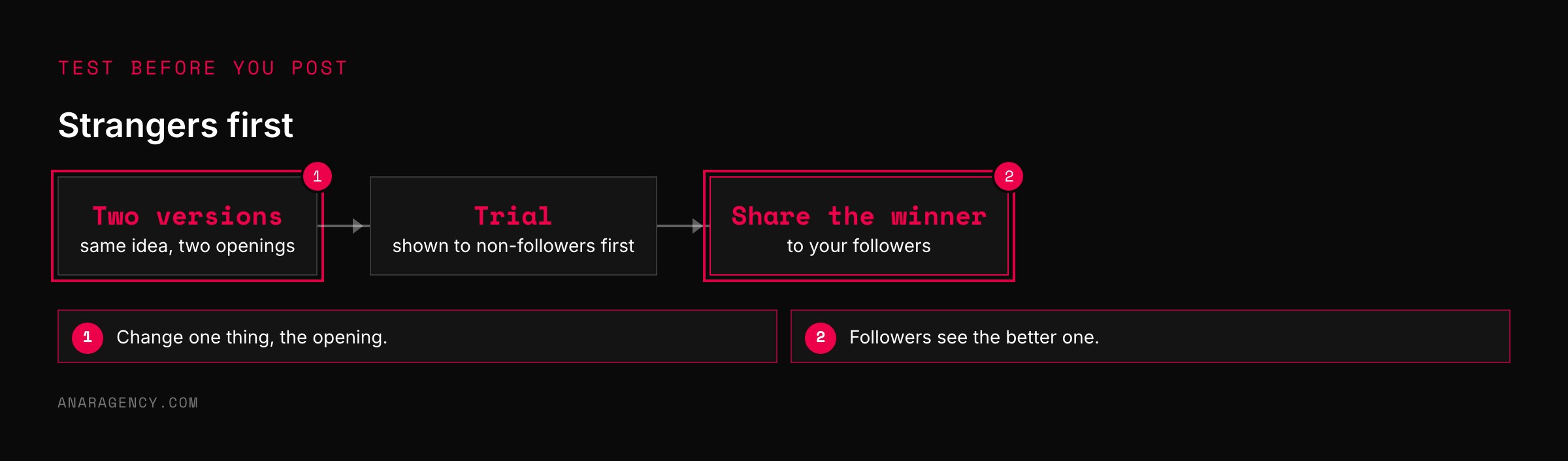
Other platforms have moved the same way. In December 2024 Instagram introduced trial reels, which are shown to non-followers first so you can see what works with strangers.
Reach has come loose from audience size.
Two ways a post finds people
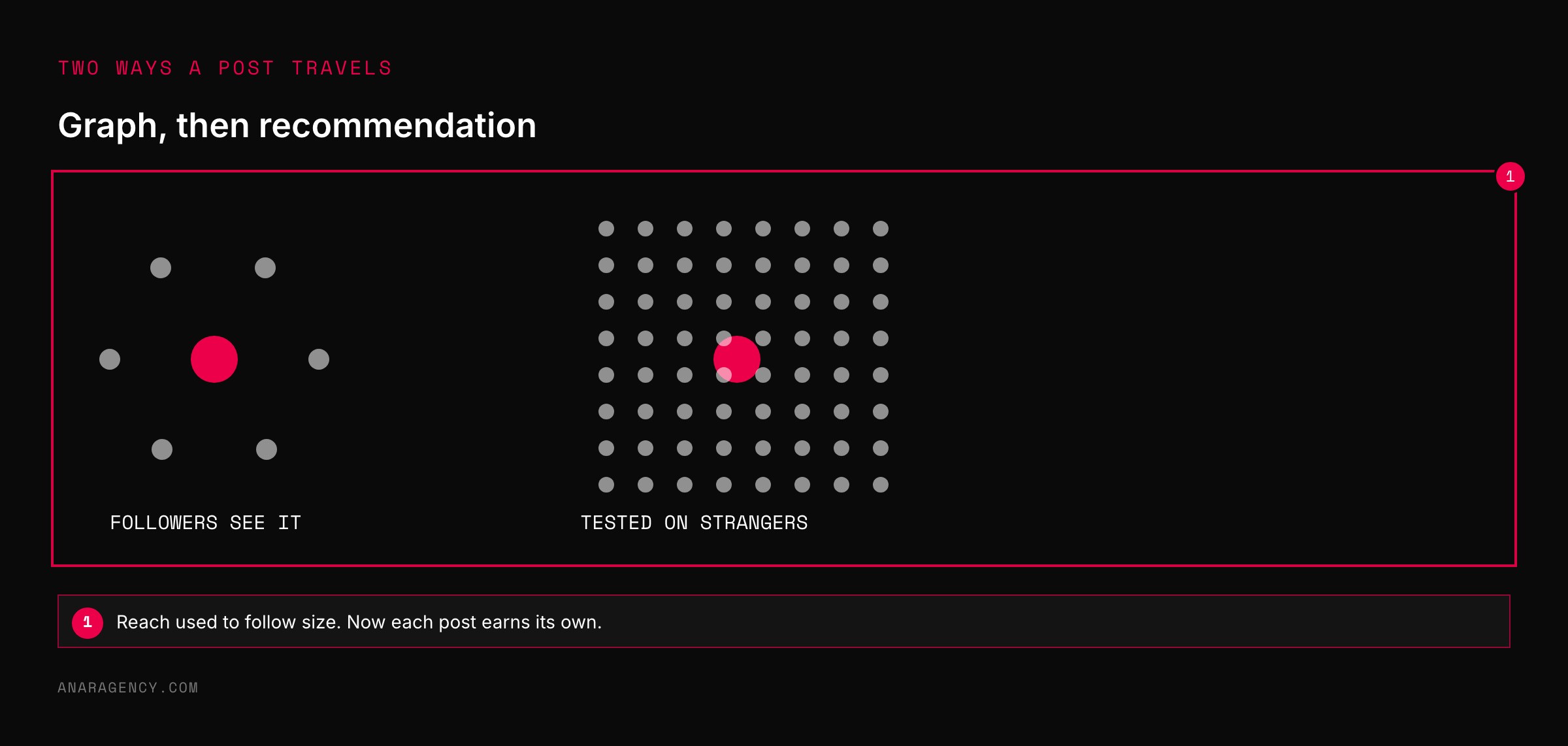
The older model was a graph. You posted, and the people who followed you saw it, more or less.
Under that model, reach was mostly a function of size. Bigger audience, bigger reach, every time.
The newer model is recommendation. The platform shows a post to a small group, watches what they do, and decides whether to show it to more.
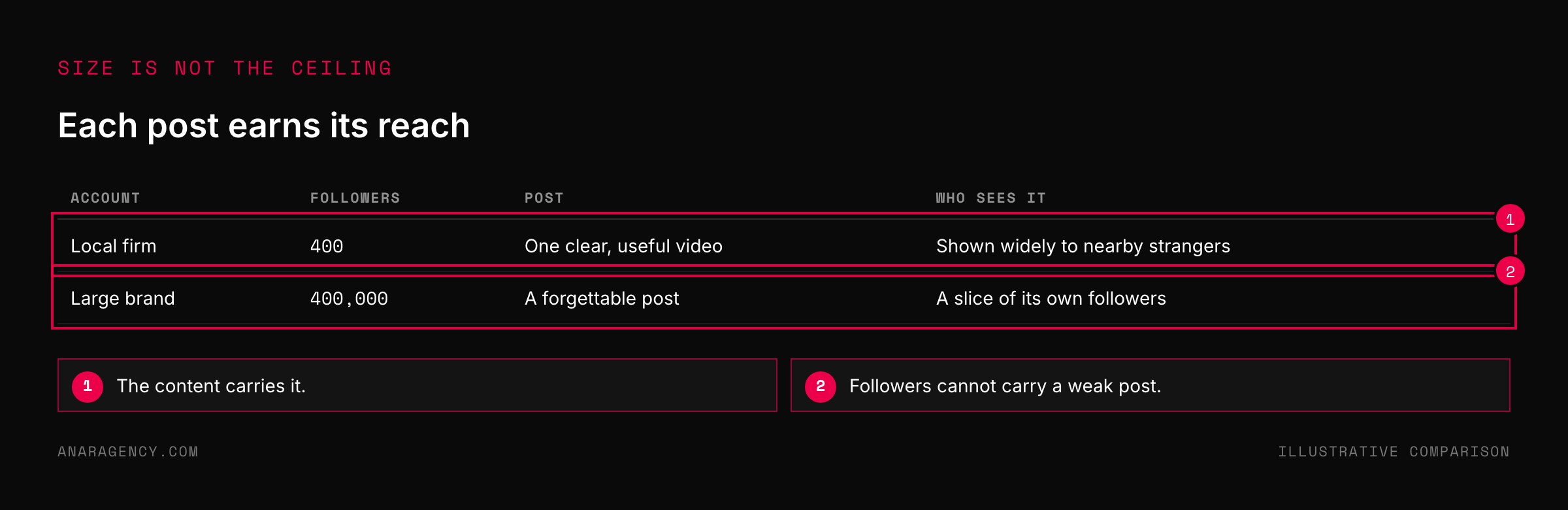
Under that model, each post earns its own reach. A new account can reach a million people with one strong post, and a large account can reach almost nobody with a weak one.
Followers still matter. They are often the first people who see a post, and they buy more. But they are no longer the ceiling.
Most feeds now recommend posts to people who do not follow you, so each post earns its own reach. TikTok says follower count is not a direct factor in its recommendations, and Instagram lets you test reels on non-followers first. Followers still help but no longer cap reach.
Judge each post on views from non-followers, average view duration, shares and saves, and replies or messages, and post fewer, stronger pieces.
Attention is cheap, energy is not
There is more content than ever, and AI makes it cheaper to produce every month. Attention can be bought or borrowed in seconds.
What is scarce is the viewer's energy: the effort it takes to keep watching, think about it, and act. Economists have long described attention as the scarce resource in an attention economy, and energy to act is scarcer still.
Platforms seem to reward posts that people choose to spend energy on. They stay, they share, they save, they reply.
That changes what a good post is. Not the loudest opening, but the one people are glad they gave a minute to.
For the topic choice behind that, see all content is about change.
Four numbers to watch instead
If follower count is not the scoreboard, what is? Look at each post on four numbers.
Views from non-followers. Is the platform showing it to strangers? Many platforms' insights split views by follower status.
Average view duration. Did people stay? YouTube reports average view duration for every video, and other platforms have equivalents.
Shares and saves. Did it matter enough to pass on, or keep for later?
Replies and messages. Did it start a conversation? For a service business, this is the number closest to revenue.
Use trial reels or a similar test where available. Try two versions of an idea on strangers, then share the winner with your followers.
"We only have 400 followers. Is it worth it?"
More than it used to be. A small account is no longer locked out of reach.
A local firm with 400 followers can post one clear, useful video and have it shown to thousands of people nearby who have never heard of it.
What a small account cannot do is post weak content and expect followers to carry it. There are not enough of them.
So post less and make each post count. One strong post a week beats seven forgettable ones. For pacing, see why posting volume should rise and fall.
And measure the right thing. If replies and messages are rising, it is working, whatever the follower count says.
What the platforms say they look for
Platforms rarely publish the full recipe. But some say what they are aiming at, and it is worth reading in their own words.
YouTube says its recommendations aim for "relevant and satisfying viewing experiences", using viewing behavior, likes, dislikes, subscriptions, and feedback, including from satisfaction surveys.
Notice what is on that list. Satisfaction, not just clicks.
That matches the four numbers in this article. A post people stay with, share, save, and reply to is a post people were glad they saw.
It also explains why tricks fade. A misleading thumbnail may win the click, but a viewer who leaves in five seconds tells the system the opposite of satisfaction.
So build every post around one question. What will the viewer have, a minute from now, that they did not have before?
For a service business, the answer is usually one useful fact, one clear example, or one mistake they can now avoid. Those are what people pass on to a colleague.
Write the answer down before you record or write anything. If you cannot answer it in a sentence, the post is not ready.
Then check your last five posts against it. The ones with a clear answer will usually be the ones with the best non-follower reach.
What to read next, and why
How TikTok recommends videos (TikTok newsroom): The company's own statement on follower count.
Trial reels (Meta newsroom): How to test with strangers before your followers see a reel.
Measure key moments for audience retention (YouTube help): Where YouTube defines average view duration and its other retention numbers.
Attention economy (encyclopedia entry): The idea that attention is the scarce resource.
So the simple takeaway is this: stop checking your follower count, and judge your last five posts on non-follower views, view duration, shares and saves, and replies.
Questions executives ask
Does follower count matter for reach?
Less than it used to. TikTok has said follower count is not a direct factor in its recommendations, and most platforms now show posts to non-followers based on how each post performs.
How can a small business increase organic reach?
Post fewer, stronger pieces that people choose to watch, share, and save, and test ideas on non-followers where the platform allows, such as Instagram's trial reels.
What should I measure instead of followers?
Views from non-followers, average view duration, shares and saves, and replies or messages. The last one is usually closest to revenue for a service business.
What are Instagram trial reels?
A way to share a reel with people who do not follow you first. Your followers do not see it unless you later choose to share it with everyone.
Is a small social media following worth investing in?
Yes, because recommendation feeds can show a strong post from a small account to many people who do not follow it. The content has to carry the post, not the follower count.

Filip Kovacevic is the founder of Anar Agency in Phoenix. He spent five years running SEO, Meta ads, email, and content for medical practices across the United States, and now does the same work for healthcare, home-service, legal, and professional-service businesses, alongside AI implementation. More from Filip →
Talk it through in 15 minutes
Bring one AI question from this article. We will tell you what we would do, whether or not you hire us.
Book a 15-Min Chat →