Brand Symbols: Label, Logo, Mantra, Symbol
Every business carries four marks. A label is the word others file you under, often given rather than chosen, and it can push people away. A logo is your visual mark.
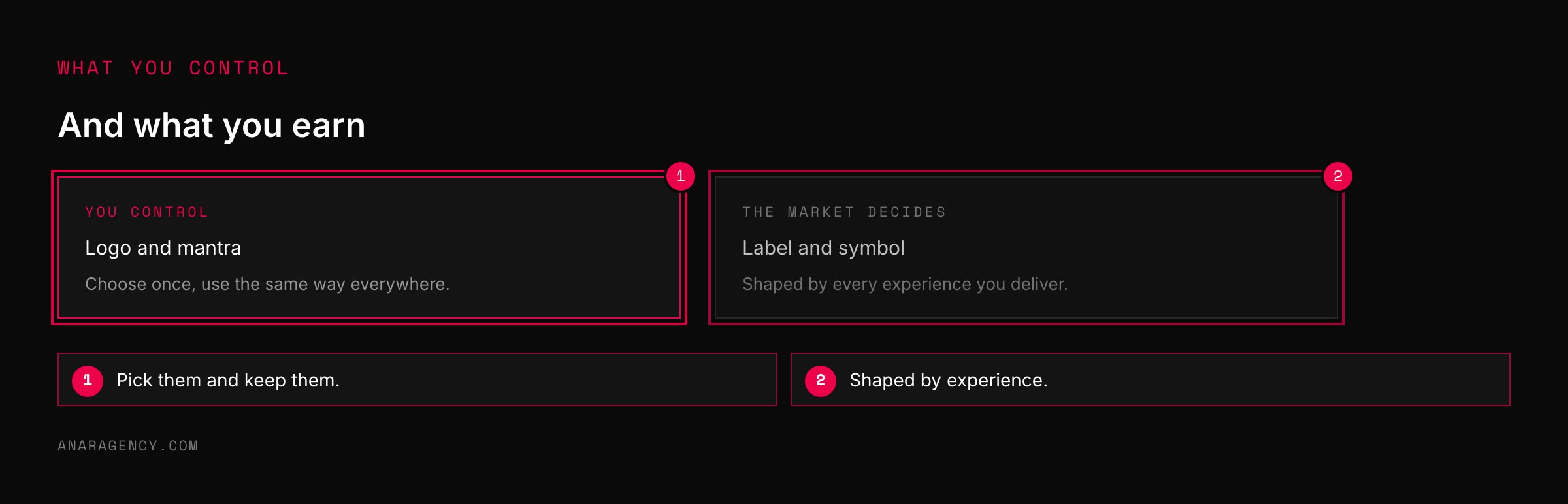
A mantra is a short phrase repeated until it stands for an idea. A symbol is a mark or phrase that now carries a whole meaning without explanation. You choose the logo and the mantra; the market decides whether they become a symbol.
Small firms build one by picking a single true idea, saying it the same way everywhere for years, and proving it in every interaction.
A student's design and a three-word line
In 1971, Carolyn Davidson, a graphic design student at Portland State University, created the Nike Swoosh. She was trying to convey motion.
In 1988, at a meeting at the agency Wieden and Kennedy, the line "Just Do It" was coined.
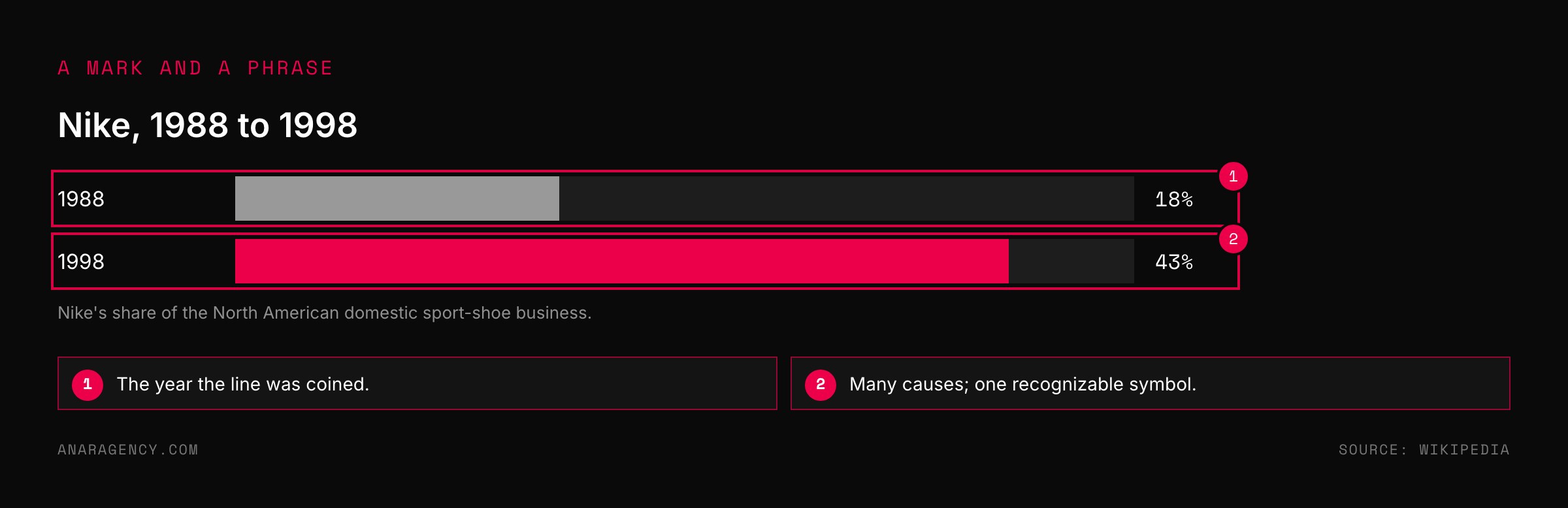
From 1988 to 1998, Nike's share of the North American domestic sport-shoe business rose from 18 percent to 43 percent.
Many things drove that growth, from athletes to products. But a mark and a phrase came to carry the brand's meaning without a word of explanation.
That is what a symbol does. It does the explaining for you, every time someone sees it.
Four marks every business carries
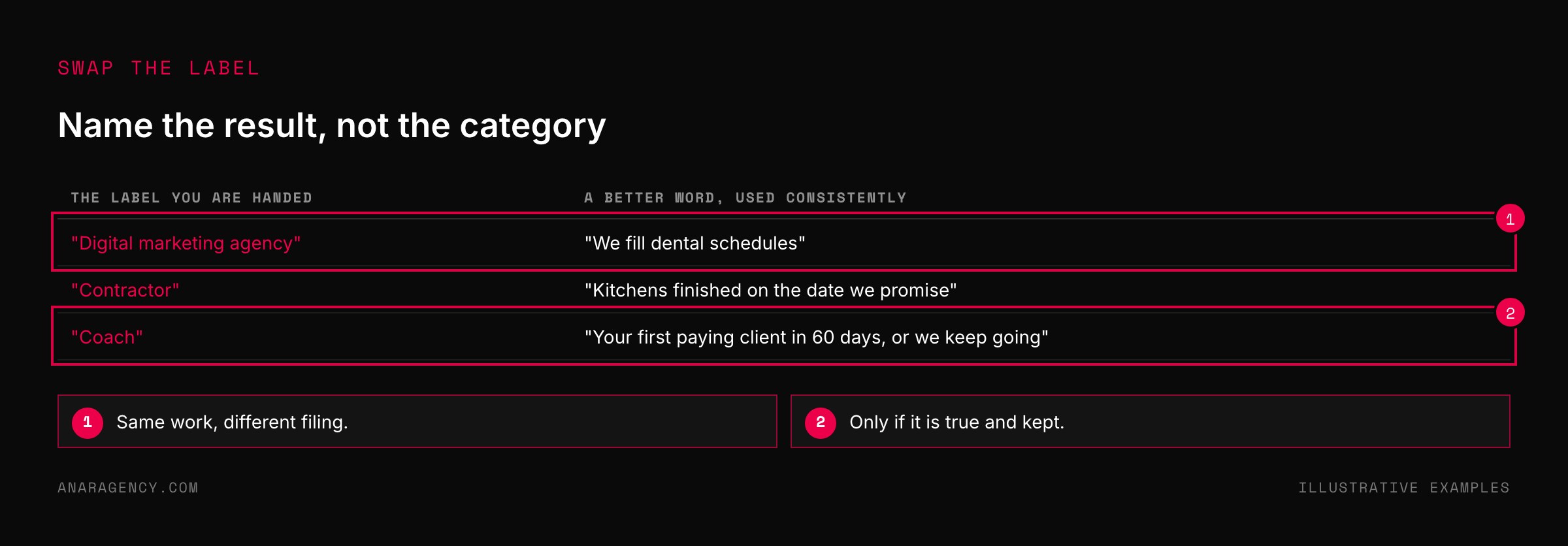
The label is the word other people file you under. "Agency." "Contractor."
"Coach." You rarely choose it, and it arrives carrying other people's experiences.
The logo is your visual mark. It identifies you, but on its own it means little until it is attached to experiences.
The mantra is a short phrase you repeat until it stands for an idea. It is the verbal version of a symbol.
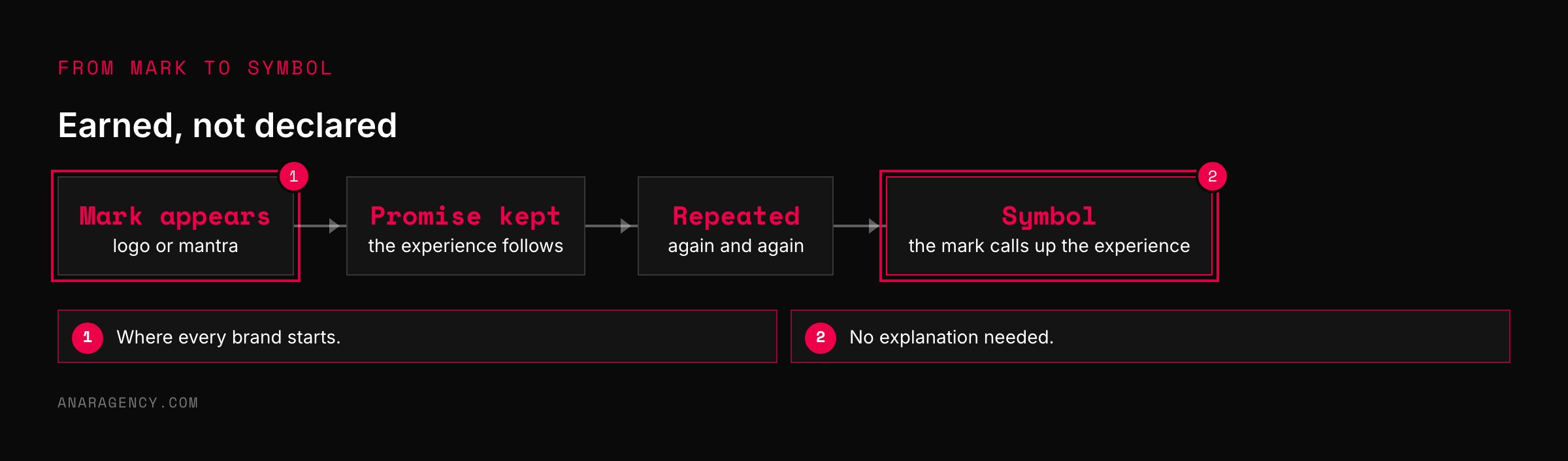
The symbol is what a logo or mantra becomes once the market attaches a whole meaning to it. You cannot declare it; you earn it.
Sociologists have long studied how labels shape the way people are seen, an idea called labeling theory. For a business, the practical point is simple: the label you are given can work for you or against you.
Every business carries four marks: the label others file it under, the logo, the mantra, and, if earned, the symbol. Labels are often given and can carry baggage, so offer a better word consistently rather than arguing. Choose a logo and a true, short mantra that gives a reason to choose you, repeat both unchanged for years, and back them with a consistent experience or ritual.
The market turns marks into symbols when the promise is kept every time.
Labels: the mark you are handed
Every market has words that carry baggage. A buyer who has been let down by "agencies" reads your page through that memory before reading a word you wrote.
You cannot argue a label away. Defending against it usually repeats it.
What you can do is offer a better word, consistently. Name what you do in terms of the result the customer buys, not the category they distrust.
"We fill dental schedules" files you differently from "digital marketing agency," even if the work is the same.
For more on the words a market already uses, see word infection.
Mantras: saying one thing for years
In 1962, Avis adopted the motto "We Try Harder". It put a positive spin on being the second-largest car rental company in the United States, behind Hertz.
The mantra did not hide the fact that Avis was second. It gave that fact a meaning customers could use: the company that has to work for your business.
A good mantra does three things. It is true, it is short enough to repeat, and it gives the customer a reason to choose you.
Then it has to be repeated. A mantra changed every year never becomes a symbol, because nobody hears it enough times to attach a meaning to it.
Our rule of thumb: once you are bored of saying it, the market is just starting to hear it.
Test a mantra before you commit. Say it to five customers and ask what it means to them.
If they describe the reason you intended, keep it. If they shrug, or describe something else, it is not yet doing its job.
And check it against reality. A mantra that promises speed in a business known for delays becomes a joke customers repeat for you.
Symbols and rituals
A symbol is earned through repeated experience. The mark appears, the promised experience follows, and after enough repetitions the mark alone calls up the experience.
That is why consistency matters more than cleverness. A clever logo attached to an inconsistent experience becomes a symbol of inconsistency.
Some brands deepen this with ritual: a repeated experience that people take part in. The sociologist Ray Oldenburg described third places, social spaces outside home and work, and many businesses try to become one.
A small firm's ritual can be simple. The same onboarding every time, the same first-week result, the same way of marking a milestone.
Repeat it until customers expect it. Expectation met over and over is how a mark turns into a symbol.
"We are too small to have a brand."
You already have one: the label people use for you and the experience they remember. The only question is whether you shape it.
Start with the two marks you control. A clear logo, used the same way everywhere, and a mantra that is true and gives a reason to choose you.
Protect them. A trademark identifies the source of goods or services; registering yours is worth a conversation with a lawyer once a name or mark starts to matter.
Then prove the mantra in every interaction. A small firm can be more consistent than a large one, because fewer people have to keep the promise.
For the trust behind a brand, see four sources of credibility.
What to read next, and why
Swoosh (encyclopedia entry): How a student's design became one of the best-known symbols in the world.
Just Do It (encyclopedia entry): The phrase, its origin, and the decade that followed.
Avis Car Rental (encyclopedia entry): The "We Try Harder" motto and the No. 2 position behind it.
What is a trademark? (USPTO): The basics of protecting a name or mark.
So the simple takeaway is this: write one true sentence that gives customers a reason to choose you, and use it, word for word, everywhere for a year.
Questions executives ask
What is brand symbolism?
The way a logo, phrase, or other mark comes to carry a whole meaning, so people recall the experience without explanation. It is earned through repeated, consistent experience.
What is the difference between a logo and a symbol?
A logo is a visual mark you choose. It becomes a symbol when the market attaches a meaning to it through repeated experience.
What is a brand mantra?
A short phrase repeated until it stands for an idea, such as Avis's "We Try Harder," adopted in 1962. A good mantra is true, short, and gives a reason to choose you.
How can a small business build a brand symbol?
Choose a clear logo and a true mantra, use both the same way everywhere for years, and keep the promise in every interaction until customers expect it.
When was the Nike Swoosh created?
In 1971, by Carolyn Davidson, then a graphic design student at Portland State University.

Filip Kovacevic is the founder of Anar Agency in Phoenix. He spent five years running SEO, Meta ads, email, and content for medical practices across the United States, and now does the same work for healthcare, home-service, legal, and professional-service businesses, alongside AI implementation. More from Filip →
Talk it through in 15 minutes
Bring one AI question from this article. We will tell you what we would do, whether or not you hire us.
Book a 15-Min Chat →