AI for Law Firms and CPA Firms: Where It Pays First

In a law or accounting firm, AI pays first in the work furthest from professional judgment. Start with intake and scheduling, then chasing and sorting client documents, then first drafts built from your own templates. Research and analysis come last, and only with every source opened and checked by a professional, because AI tools can invent citations.
The duties do not change: you are responsible for the output, client information must be protected, and fees must reflect time actually spent. For tax preparers, federal rules also restrict how return information may be used and disclosed.
Cases that did not exist
In 2023 a man sued an airline in federal court in New York, saying a serving cart had injured his knee on a flight.
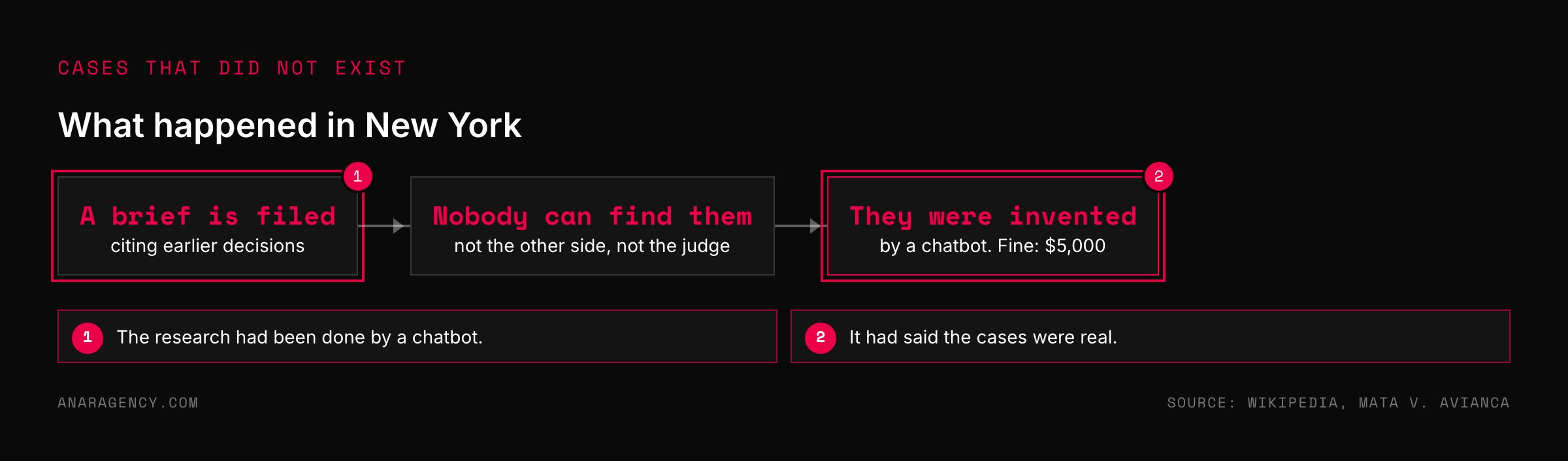
The airline asked for the case to be thrown out. His lawyers filed a brief opposing that, citing a series of earlier court decisions in support.
The airline's lawyers could not find the decisions. Neither could the judge. They did not exist.
One of the lawyers had used ChatGPT for the research, and it had invented the cases, complete with quotations and citations. When he asked the tool whether they were real, it assured him they were.
The court fined the lawyers 5,000 dollars. The case became the most famous AI mistake in any profession, and it is usually told as a warning to stay away. It is a better guide to where to begin.
What went wrong, exactly
The lawyer did not fail by using an AI tool. He failed by using it for the hardest thing first, and by not checking.
Legal research is the part of the job where one invented source is a catastrophe. It is also where these tools have a known weakness.
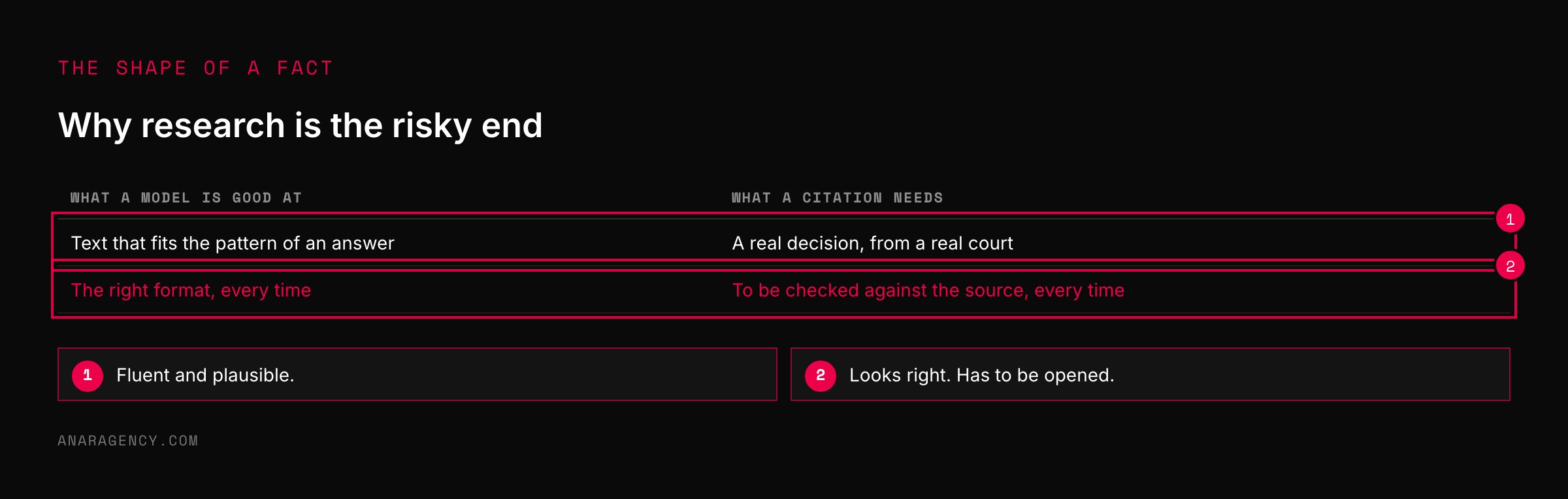
A language model produces text that fits the pattern of an answer. When it lacks the fact, it can produce something with the shape of a fact instead. Researchers call these hallucinations.
A citation is the perfect case. It has a rigid format that is easy to imitate and impossible to verify by reading it.
So the order matters. A firm that begins with research is starting at the top of the risk ladder. A firm that begins with the telephone is starting at the bottom, where the same tools are reliable and the gains are immediate.
Adopt AI in a professional firm in order of distance from professional judgment: intake and scheduling, then document chase, then first drafts from your own templates, then research with every source checked by a professional. Treat output as a junior's draft. Know where client data goes before it enters any tool.
Tax preparers must settle Section 7216 questions first. Bill for time actually spent, tell clients what you use, name one partner responsible, and check your own regulator's guidance.
The First-Pay Map
Here is the order we recommend to professional firms, from least risk to most.
1. Intake and scheduling. Answering new enquiries at any hour, collecting the basic facts, booking the consultation.
No advice is given. For most small firms this is where the money is being lost, as we show in speed to lead.
2. Document chase. Every matter and every tax return waits on paperwork from the client.
Reminders, checklists, and sorting what arrives are tedious, rule-bound, and safe to automate.
3. First drafts from your own templates. Engagement letters, routine letters, summaries of documents you supply.
The model works from your material, and a professional reads every word before it leaves.
4. Research and analysis. Last, and only with a rule that every source is opened and read by a qualified person.
Tools built for the profession on verified databases are safer than general chatbots, and still need checking.
Notice the pattern. Each step up moves closer to professional judgment, and needs more review.
We have service pages on each profession: AI for law firms and AI for accounting firms.
Careful Firms: the rules they keep
The firms using AI without incident are not the most cautious or the most eager. They wrote down a few rules early. We call them Careful Firms.
They treat the output as a junior's draft. Useful, fast, and never sent unread. In July 2024 the American Bar Association issued its first formal ethics opinion on generative AI.
It says lawyers must consider their duties of competence, confidentiality, communication, and reasonable fees.
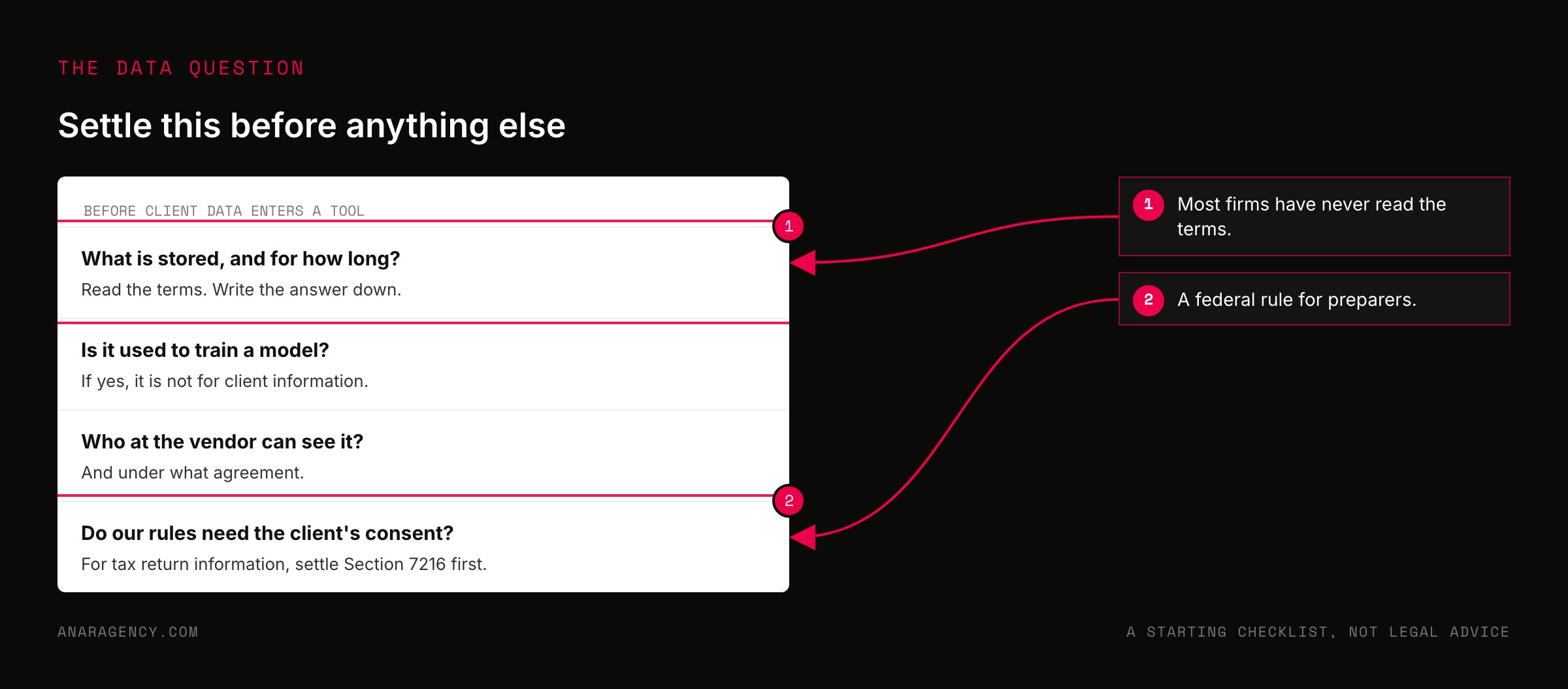
They know where client data goes. Before any client information enters a tool, someone has read its terms: what is stored, who can see it, whether it trains a model. Where the rules call for it, the client has agreed.
Tax preparers check the federal rule. Section 7216 of the Internal Revenue Code restricts how preparers use and disclose tax return information, with penalties for breaches. Putting a client's return into a third-party tool is a disclosure question to settle first.
They bill honestly. If a task that took three hours now takes thirty minutes, the opinion is clear that hourly fees must reflect the time actually spent.
They tell clients. A line in the engagement letter about which tools are used and how information is protected.
They name one partner responsible. Someone owns the list of approved tools and the rules for each. We explain why in who owns AI.
"Our clients pay for judgment. Should we use this at all?"
You may feel that a profession built on judgment has no business handing work to a machine. The answer is that nobody should hand over the judgment.
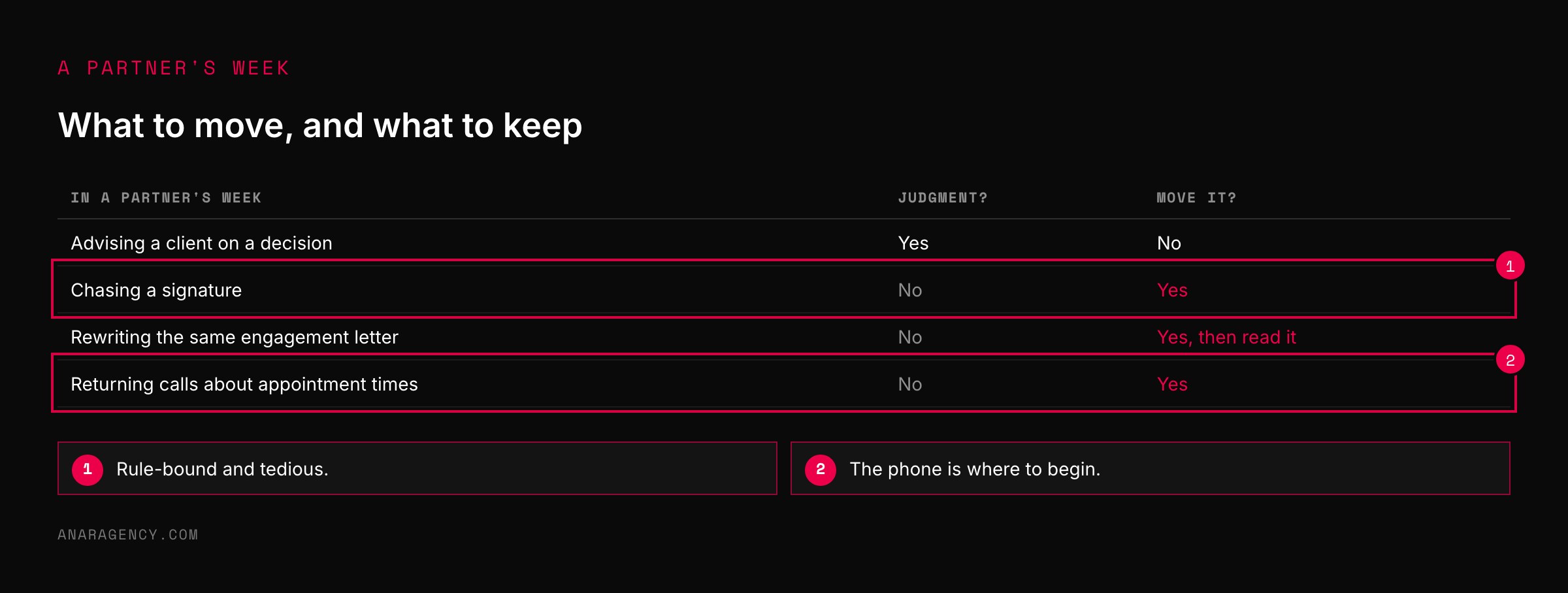
Look at where a partner's week actually goes. A great deal of it is not judgment. It is chasing a signature, re-keying figures, rewriting the same letter, returning calls about appointment times.
That is the work to move. Every hour of it taken away is an hour returned to the thing clients pay for.
Staff will use these tools whether or not the firm has a policy. A firm with no rules has not avoided the risk. It has only stopped being able to see it, which we cover in shadow AI.
And check your own regulator. This article describes US guidance at a general level and is not legal advice. State bars and boards of accountancy have issued their own opinions, and they differ.
The lawyers in New York were not undone by technology. They were undone by filing something nobody had read. That rule is older than any software.
What to read next, and why
Mata v. Avianca, Inc. (encyclopedia entry): The case, the invented citations, and the sanction.
ABA issues first ethics guidance on a lawyer's use of AI tools (ABA announcement): A summary of Formal Opinion 512 and the duties it applies.
Section 7216 Information Center (IRS): The rules on use and disclosure of tax return information by preparers.
Hallucination (artificial intelligence) (encyclopedia entry): Why models produce confident falsehoods, and what reduces them.
So the simple takeaway is this: do not start with research. Start with the phone and the paperwork, write three rules about client data and review, and move up the ladder one step at a time.
Questions executives ask
How are law firms using AI?
Most safely for client intake and scheduling, chasing and organizing documents, and producing first drafts of routine letters and summaries from the firm's own templates. Legal research is the highest-risk use and requires every cited source to be verified by a lawyer.
How can accounting and CPA firms use AI?
For answering enquiries and booking, reminding clients for missing documents, sorting and summarizing what arrives, and drafting routine correspondence. Before any tax return information goes into a third-party tool, the firm should confirm it complies with Section 7216.
What happened in Mata v. Avianca?
In 2023 lawyers in a New York federal case filed a brief citing court decisions that had been invented by ChatGPT. The court dismissed the case and fined the lawyers 5,000 dollars.
What does the ABA say about lawyers using AI?
Formal Opinion 512, issued in July 2024, says lawyers using generative AI must consider their duties of competent representation, protecting client information, communicating with clients, and charging reasonable fees consistent with time spent.
Can a firm bill the same hours if AI did the work faster?
Under the ABA opinion, fees must be reasonable and hourly billing must reflect time actually spent. A task completed faster with AI should be billed for the shorter time, or priced another way agreed with the client.

Filip Kovacevic is the founder of Anar Agency in Phoenix. He spent five years running SEO, Meta ads, email, and content for medical practices across the United States, and now does the same work for healthcare, home-service, legal, and professional-service businesses, alongside AI implementation. More from Filip →
Talk it through in 15 minutes
Bring one AI question from this article. We will tell you what we would do, whether or not you hire us.
Book a 15-Min Chat →